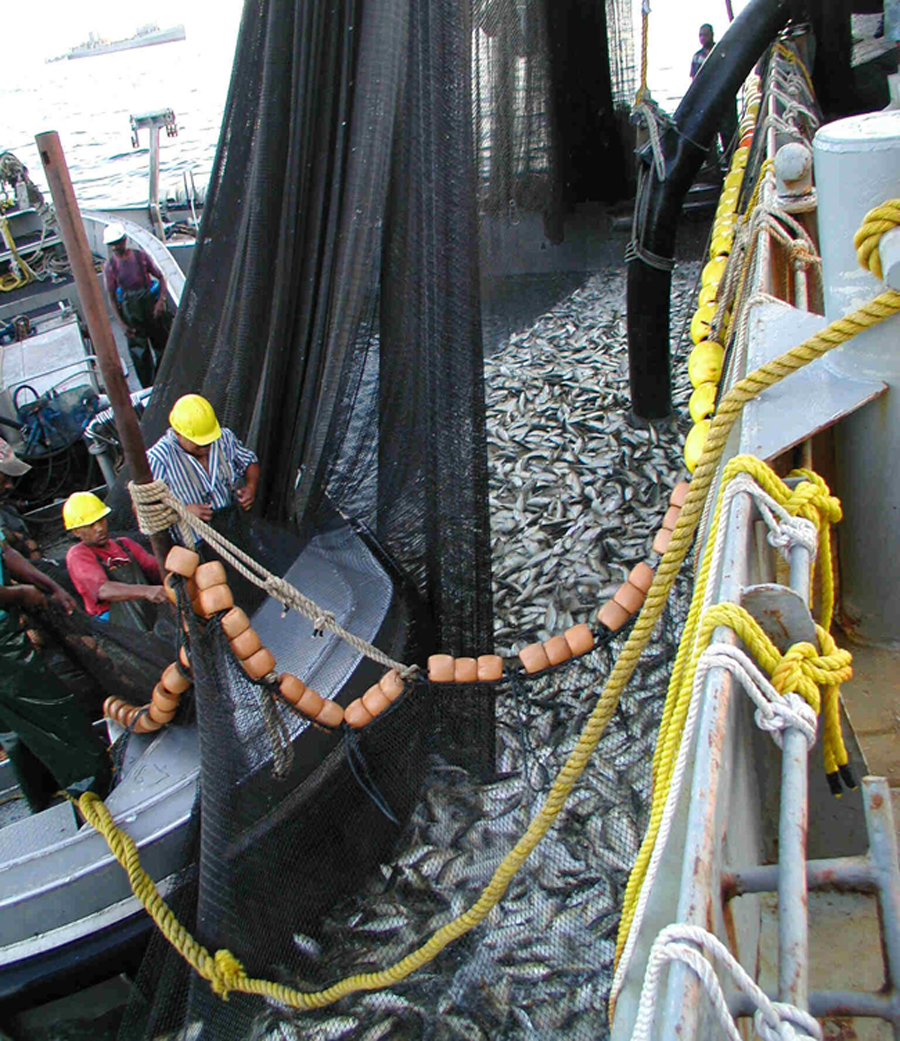
“Overfishing is not limited to the Chinese and top predators like bluefin tuna. It happens right here at home. Pictured is the harvesting of menhaden in VA. The consequences of overfishing are fewer and smaller stripers and the loss of birds of prey and other predator fish. Source: National Oceanic and Atmospheric Administration (NOAA), Biostatistical Menhaden Surveys.”
MOST IMPORTANT FISH in the SEA
https://en.wikipedia.org/wiki/Menhaden
“Menhaden, also known as mossbunker, bunker, and “the most important fish in the sea”,[1] are forage fish of the genera Brevoortia and Ethmidium, two genera of marine fish in the order Clupeiformes. Menhaden is a blend of poghaden (pogy for short) and an Algonquian word akin to Narragansett munnawhatteaûg, derived from munnohquohteau (“he fertilizes”), referring to their use of the fish as fertilizer.”[2]
LOCALLY KNOWN as BUNKER
https://sportfishingmag.com/commerce-sides-fishermen-menhaden-case
https://qns.com/2026/09/ariola-menhaden-fishing-buffer
CM Ariola calls on federal government to establish 12-nautical-mile buffer preventing menhaden fishing along Atlantic coast
by Shane O’Brien / September 17, 2026
“Council Member Joann Ariola has written to Commerce Secretary Howard Lutnick to call on the federal government to establish a 12-nautical-mile buffer preventing industrial menhaden fishing along the Atlantic coast. Ariola warned Lutnick that the overharvesting of menhaden populations – commonly known as bunker – in waters off Jamaica Bay and the Rockaway Peninsula may be contributing to increased shark sightings near New York City beaches, which she claimed was having a detrimental impact on local economies.
She added the disappearance of menhaden populations may also contribute to devastating impacts on osprey nesting habits. In 2019, New York State prohibited the use of purse seine nets – referring to a large wall of netting deployed around a school of fish – to harvest menhaden populations within three miles of the state’s coastline. However, the state’s jurisdiction ends at three nautical miles, allowing industrial reduction vessels to harvest schools of menhaden immediately beyond that boundary.
Ariola is calling on Lutnick and the federal government to introduce a 12-mile buffer to help prevent larger predators such as sharks from traveling close to the coast in search of food. She said the buffer zone would also improve feeding grounds relied upon by seabirds, marine mammals, gamefish and other coastal wildlife. “My constituents can watch menhaden being removed from the ocean just beyond New York’s jurisdiction, but neither they nor the state can reach across that line and stop it,� Ariola said in a statement. “Only the federal government can close this dangerous loophole.�
In her letter to Lutnick, Ariola wrote that there was a “growing body of evidence� that sharks are coming closer to shore as a result of decreased menhaden populations beyond the three-mile buffer. Increased shark sightings, she said, had led to numerous beach closures in the Rockaways over the summer. “Each time these sharks force a beach to close, it has a negative impact both on the beachgoers as well as on the businesses that depend on the revenue provided by summer visitors,� Ariola wrote. Ariola sent the letter after receiving what she described as alarming statistics regarding nesting ospreys in Jamaica Bay. She said 25 nesting pairs were spotted across the bay this year, with only five surviving chicks.
Don Riepe, Jamaica Bay Guardian for the American Littoral Society, said osprey populations are “crashingâ€� along the Atlantic coast. “I have been managing and monitoring the Jamaica Bay osprey population since the first successful nest occurred in 1991,â€� Riepe said in a statement. “The population grew every year, and today we have more than 25 nesting pairs in the greater bay area. The population had been fully restored. This year, however, 20 of those nests were empty, and the other five produced only one chick each. Something happened, and the osprey population is crashing not only here in the bay, but up and down the Atlantic coast.”
“Most wildlife managers I speak with all agree that it’s because of the overharvesting of menhaden, their main food source.� Capt. Paul Eidman, founder of the conservation group Menhaden Defenders, said the overharvesting of menhaden results in larger predators being pushed closer to the shore in search of food sources. “A 12-nautical-mile buffer doesn’t shut this fishery down; it simply puts industrial-scale extraction farther from the water our children swim in and the ospreys that need these fish to survive,� Eidman said.
Dan Mundy Jr., president of the Jamaica Bay EcoWatchers, said he was concerned that commercial menhaden reduction fishing is removing too large a proportion of the population from the waters surrounding New York. “We have participated in numerous trips offshore along the Northeast coast, and one of the most striking changes we have observed is the apparent disappearance of the large menhaden bait balls that were commonly seen in previous years,� Mundy said. “Menhaden are not simply a commercial resource. They are a fundamental component of the coastal food web.�
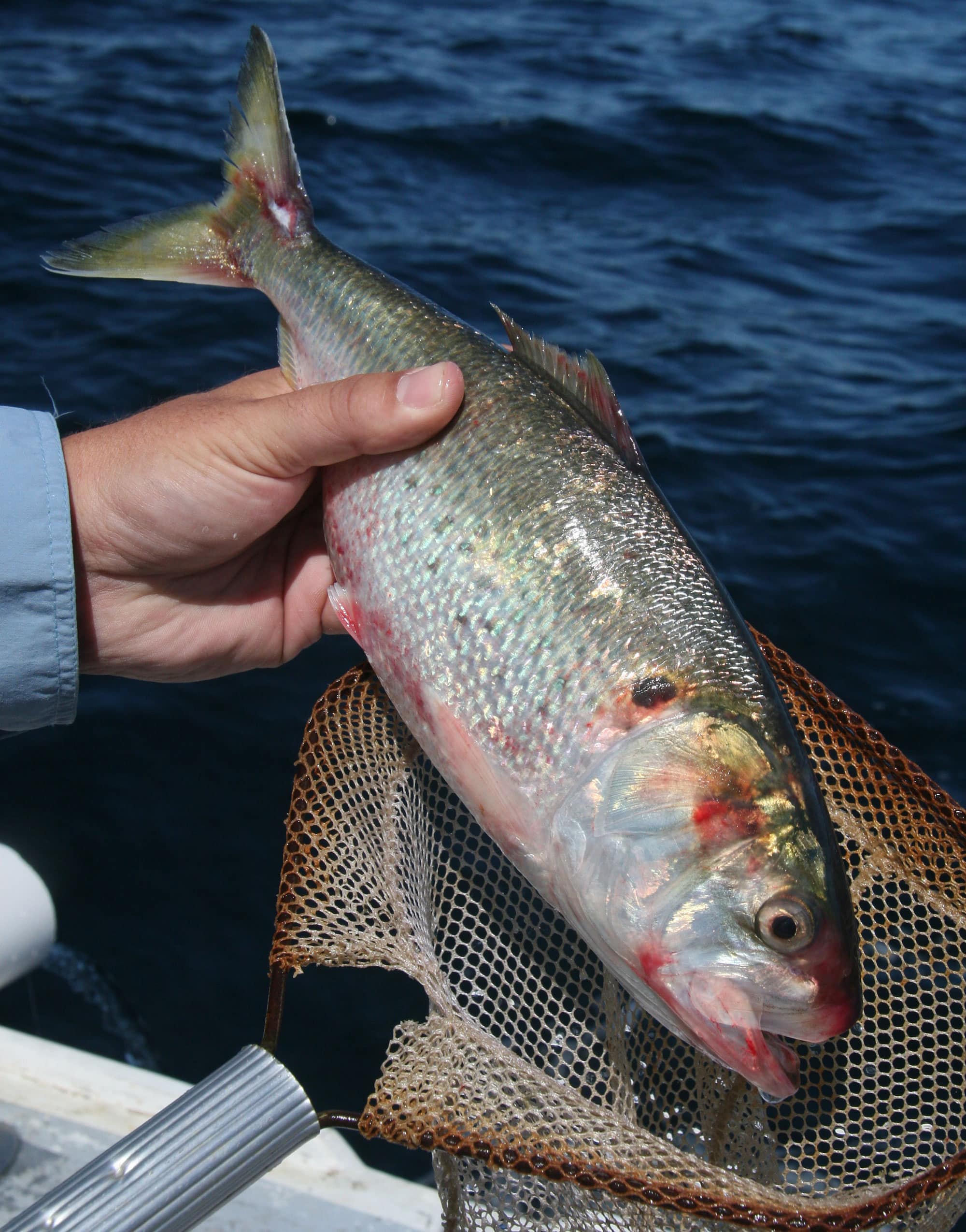
“The state of Virginia has been ruled out of compliance for allowing Canada-based Omega Protein to overfish menhaden stocks in Chesapeake Bay.”Â
12 NAUTICAL MILE BUFFER against OVER-HARVESTING
https://ssentinel.com/company-to-continue-menhaden-fishing-chesapeake
https://rockawaytimes.com/calls-for-federal-action-to-protect-menhaden
CM Ariola Calls for Federal Action to Protect Menhaden
by Rockaway Staff / September 17, 2026
“On Monday, September 14, Councilwoman Joann Ariola sent a letter to U.S. Secretary of Commerce Howard Lutnick, asking him to initiate federal rulemaking to establish a 12-nautical-mile coastal buffer in which industrial menhaden reduction vessels would be prohibited from operating. In her letter, Ariola warned that the disappearance of menhaden, commonly known as bunker, from waters surrounding Jamaica Bay and the Rockaway peninsula may be contributing to devastating osprey nesting results and changes in the behavior of larger predators.
“Menhaden may be a small fish, but they hold an enormous part of our coastal ecosystem together,� Councilwoman Ariola said in a press release. “When industrial vessels remove them by the millions, the consequences travel all the way up the food chain, from ospreys and striped bass to sharks, whales and dolphins. New York has already acted within its waters to protect these fish,� the Councilwoman added. “Now the federal government must protect them in the waters beyond our reach.� �
New York prohibited the taking of menhaden by purse seine in state waters in 2019. However, the state’s jurisdiction extends only three nautical miles from shore, allowing industrial reduction vessels to operate immediately beyond that boundary in federal waters. Ariola’s proposal would require industrial reduction vessels to operate farther offshore, away from the feeding grounds relied upon by seabirds, marine mammals, gamefish and other coastal wildlife, and establish a 12-mile buffer from the shore.
“My constituents can watch menhaden being removed from the ocean just beyond New York’s jurisdiction, but neither they nor the state can reach across that line and stop it,� Ariola said. “Only the federal government can close this dangerous loophole.� The warning comes following an alarming nesting season for Jamaica Bay’s osprey population. “I have been managing and monitoring the Jamaica Bay osprey population since the first successful nest occurred in 1991,� Don Riepe, Jamaica Bay Guardian for the American Littoral Society, said.
“The population grew every year, and today we have more than 25 nesting pairs. The population had been fully restored. This year, however, 20 of those nests were empty, and the other five produced only one chick each. Something happened, and the osprey population is crashing not only here, but up and down the Atlantic coast. Most wildlife managers I speak with all agree that it’s because of the overharvesting of menhaden, their main food source,� Riepe added. “This impacts not only the ospreys but many other species in the food web including whales, seals, dolphins, sharks, striped bass, and bluefish.�
Commercial fishing businesses and bait shops have also noticed an impact to menhaden schools. “Every summer, we watch it happen: bunker pulled offshore in bulk, and the fish, birds and sharks that depend on them pushed closer to shore looking for food,� Capt. Paul Eidman, founder of the conservation group Menhaden Defenders, said. “A 12-nautical-mile buffer doesn’t shut this fishery down; it simply puts industrial-scale extraction farther from the water our children swim in and the ospreys that need these fish to survive. Ten states have already drawn that line in their own waters. It is time for the federal government to do the same in the waters only it can reach.�
“Our concern is that the current level of commercial menhaden reduction fishing may be removing too large a portion of this important forage-fish population from the ocean,� Dan Mundy Jr., president of the Jamaica Bay EcoWatchers said. “We have participated in numerous trips offshore along the Northeast coast, and one of the most striking changes is the apparent disappearance of the large menhaden bait balls commonly seen in previous years. The combination of fewer large menhaden schools offshore, poor osprey chick survival and increased observations of sharks closer to shore warrants closer scientific examination.�
In light of these concerns, the councilwoman’s letter has requested that Secretary Lutnick initiate rulemaking under Section 804(b) of the Atlantic Coastal Fisheries Cooperative Management Act before the Atlantic States Marine Fisheries Commission meets in November. “This is about restoring balance before the damage becomes irreversible,� Ariola concluded. “Keeping industrial vessels farther offshore is a reasonable step that protects wildlife, strengthens our recreational fishing economy and shore bird populations, and helps keep large predators away from swimming beaches. Washington has the authority to act, and there is no excuse for waiting until the ecosystem collapses.�
REDUCTION FISHING
https://virginiamercury.com/battle-for-menhaden-threatens-chesapeake-bay
https://virginiamercury.com//legislation-to-stop-menhaden-reduction-fishing
https://virginiamercury.com/2024/05/16/unsealed-federal-lawsuit-alleges-omega-protein-skirted-u-s-citizen-ownership-requirement
Unsealed federal lawsuit alleges Omega Protein skirted U.S. citizen ownership requirement
by Charlie Paullin / May 16, 2024
“A recently unsealed federal lawsuit alleges that the lone menhaden reduction fishery in the Chesapeake Bay broke federal law by creating a shell company to cover up its foreign ownership, routing profits to a Canadian company instead of keeping them in Virginia. Benson Chiles and Chris Manthey, two private investigators involved in environmental conservation efforts, brought forward the lawsuit in the U.S. District Court for the Southern District of New York in 2021 against Omega Protein under the False Claims Act, saying the company violated the Jones Act and American Fisheries Act by not disclosing that its owners are family.
The lawsuit is the latest in a long series of events around the menhaden reduction fishery that Omega Protein says creates economic activity for the state, a claim countered by fish conservationists who say its practices lead to Bay ecosystem harms. Meanwhile, Virginia lawmakers are considering scientific reports to determine what is actually happening. “Everyone knows you cannot lie to the federal government,� said Brendon DeMay, an attorney for the two plaintiffs. “You just can’t do it. It’s pure fraud.�
Ocean Harvesters, the company more specifically accused of wrongdoing, said in a statement the lawsuit is “without merit� and will be “vigorously� defended. “Throughout this period, American citizens have owned more than 75% of the vessel entities as is consistent with citizenship requirements under federal law,� the statement reads. “Ocean Harvesters is committed to compliance with all applicable laws and to continuing to conduct responsible, sustainable fishing operations along the Atlantic coast and in the Gulf of Mexico.�
Under the False Claims Act, the case went under seal to let the U.S. Department of Justice conduct its investigation, which can either result in a recommendation to dismiss the case or take it over, or to let the case proceed on its own. In this instance, the DOJ is letting the case proceed on its own. The lawsuit alleges that Canadian-based Cooke Inc. acquired Reedville, Virginia-based Omega Protein in 2017 with financial backing from outside investors.
As part of the pitches for funding, Cooke assured investors the company would create a company called Alpha Vessels, which operates under the designated business name Ocean Harvesters, to run the ships Omega Protein buys the menhaden catches from. Alpha Vessels would be run by Seth Dunlop, investors were told, a U.S. citizen and nephew of Cooke Inc. CEO and Canadian citizen Glenn Cooke. That U.S.-based ownership of Alpha Vessel was needed because under the Jones Act, certain vessels sailing within U.S. waters must be owned and operated by U.S. citizens.
The Jones Act was enacted to build up the American maritime industry. Under the American Fisheries Act, the U.S. citizen ownership requirement under the Jones Act must be met. But Alpha Vessels didn’t disclose the alleged ultimate control leading back to the foreign-based Cooke company to the Maritime Administration (MARAD), under the U.S. Department of Transportation, or U.S. Coast Guard, both of which are responsible for enforcing the federal laws, the lawsuit states.
After initially failing to be forthright with that information, the company renewed its approval year after year through 2021 via an online portal that prevented any verification of the ownership structure being satisfied by MARAD, the lawsuit states. Breaking the federal laws would mean that a Virginia-based company is not reaping the profits of a fishery that primarily exists within the Chesapeake Bay and off the coastal waters of Virginia, and are instead going to a Canadian-based company. “Why do they go to Canada?� DeMay said.
According to an industry insider who wished to remain anonymous because of the pending litigation, familial connections between companies is a common occurrence. It’s a structure used for the bait fisheries operating in the crabbing industry in the Bering Sea off of Alaska, and scallop fishers, according to the source. “That’s very typical,� the source said. The lawsuit is the latest from the two plaintiffs who have targeted Omega Protein before: in 2010 Chiles and Manthey sued the company for PCB contamination in fish oil supplements, resulting in a lawsuit settlement, the source noted.
“I’m not surprised a pair of individuals that have filed suit and acted in the regulatory regime in the menhaden fishery have taken this up,â€� said the source. “This industry just gets really attacked.â€� Now that the case is unsealed, Omega Protein will have a chance to file a response to the complaint in court, as the proceedings continue and could head toward a trial as the lawsuit requests. Based on the penalties that are assessed to violators each day for non-compliance of the federal laws, the lawsuit says Omega Protein should be fined in excess of $2 billion.”
Editor’s note: This story has been updated to more accurately reflect Ocean Harvester’s relationship to Omega Protein.
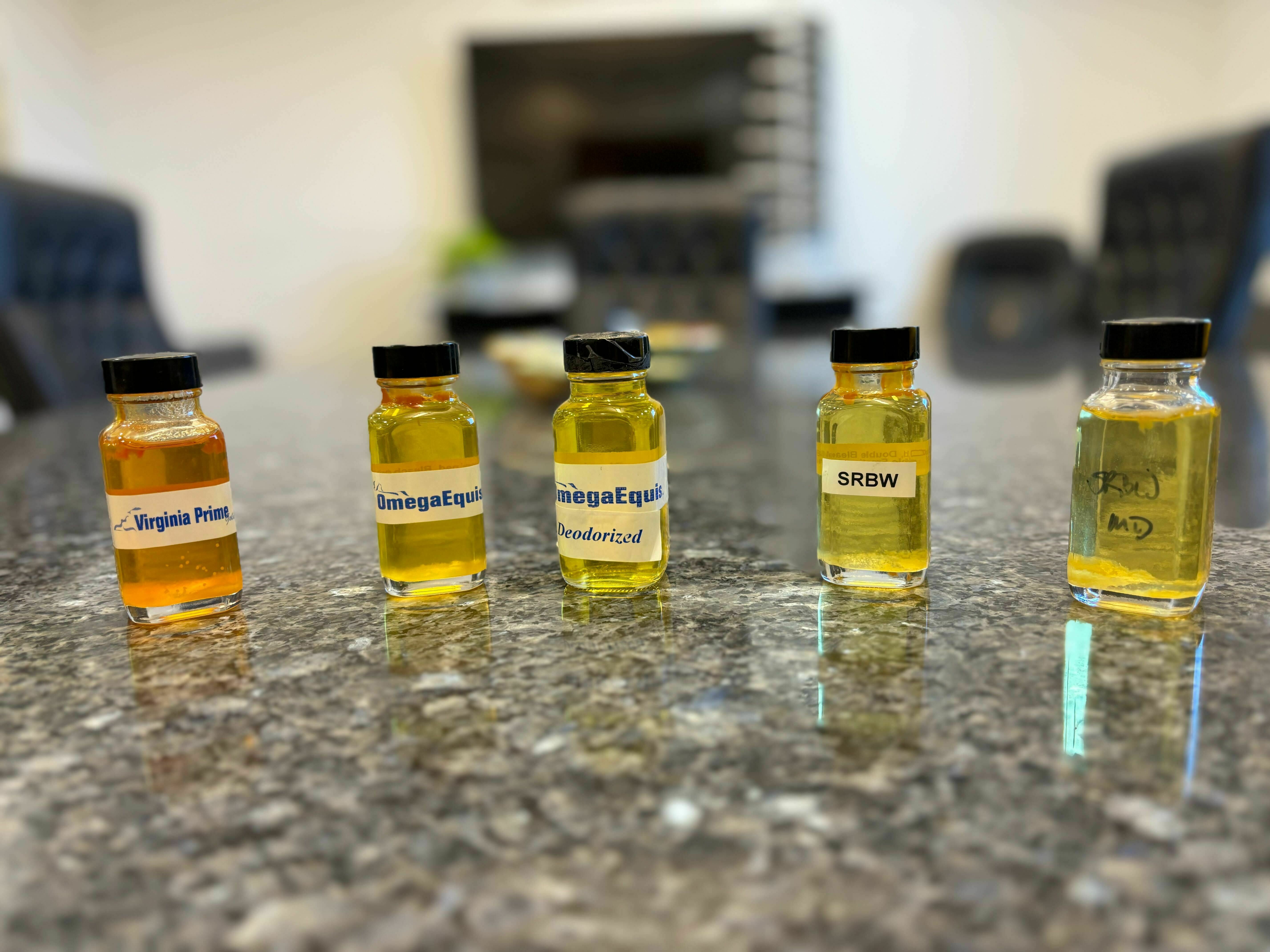
“Omega Protein uses menhaden to make a variety of fish oil products at its facility in Reedville, Virginia. Katherine Hafner/WHRO News
OMEGA PROTEIN
https://nytimes.com/2023/menhaden-chesapeake-bay-fishing
https://npr.org/small-fish-is-at-the-center-of-a-big-fight-in-the-chesapeake-bay
A small fish is at the center of a big fight in the Chesapeake Bay
by Katherine Hafner / February 14, 2024
“On a breezy afternoon, Chris Dollar launched his boat into the Ware River in Gloucester, Virginia. Pulling away from the dock, he pointed to small ripples in the water: jumping menhaden, a small, silver fish that has found itself at the center of one of the most heated and longest-running debates in the state. Dollar has spent his life on the Chesapeake Bay. He owns a charter fishing business, equipping sport fishers and taking them out on the water to catch local favorites like striped bass and rockfish. Menhaden, he said, are “not a glamorous fish. I wouldn’t call them ugly,” Dollar said with a laugh. “But I wouldn’t call them poster children for the Chesapeake writ large.”
But in recent years, menhaden have become a major symbol of the bay. The little forage fish is a crucial part of the local ecosystem, a nutrient-dense food source for species from ospreys and eagles to the striped bass and red drum that support the local recreational fishing industry – and businesses like Dollar’s. The fish are also valuable to a commercial fishery dating back more than a century, which harvests hundreds of millions each year to produce fishmeal and fish oil for products like pet food and omega-3 supplements. Virginia is the last East Coast state that allows menhaden reduction fishing in state waters.
Now, environmentalists and sportfishing groups throughout the Chesapeake Bay watershed want the state to ban the fishery in the bay completely. They worry overfishing is threatening the local menhaden population. Dollar is one of them. He said he sees drastically fewer fish in the bay and its tributaries than he used to. Schools of menhaden that used to be “the size of a football field” have shrunk to “maybe a tennis court,” he said. “You see those smaller and smaller numbers.” He believes the fate of beloved local species that rely on menhaden hinges on getting rid of the commercial fishery. “You’ve got to wonder if an industrial fishery of this size has a place anymore in the 21st century, in a narrow Chesapeake Bay that’s already facing so many other problems,” Dollar said.
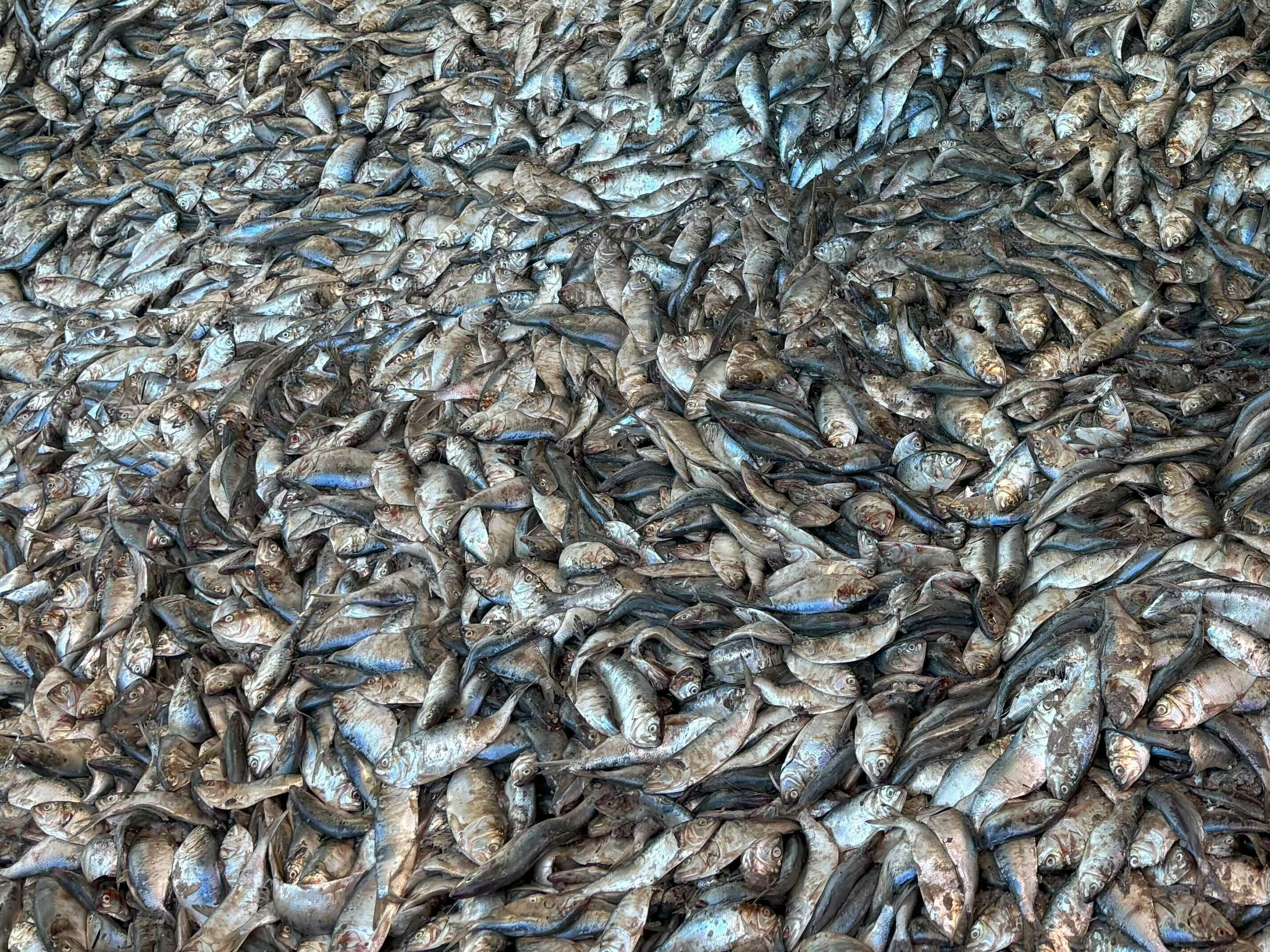
“Menhaden in a holding bin at Omega Protein’s reduction plant in Reedville, Virginia in December. Omega harvests hundreds of millions of menhaden each year to produce fishmeal and fish oil for products like pet food and omega-3 supplements. Katherine Hafner / WHRO News”
Omega Protein, the last company harvesting menhaden in the Chesapeake, says there’s no evidence backing up the concerns, pointing to recent federal surveys finding the overall East Coast menhaden population appears healthy. Critics argue that data doesn’t address what’s specifically happening in the bay. “It’s not about the science,” Omega spokesperson Ben Landry said about the ongoing criticism. “There’s no amount of factual evidence that can sway a person who, in their heart of hearts, believes menhaden is overfished.” The company says banning its operations in the bay would put it out of business, threatening more than 200 local jobs.
Researchers say more data is needed to fully understand what’s happening in the bay. But in January, Virginia lawmakers passed on a chance to fund a major study on the status of menhaden. The proposal has been delayed for at least a year. It’s the latest chapter in a fight that stretches back decades. “What we need to contemplate as a society is the balance,” said Bryan Watts, director of William & Mary’s Center for Conservation Biology. “How much do we care about the functioning of the ecosystem and the long term health of the ecosystem, and how much do we care about industry?”
The 250 million-odd menhaden that Omega Protein catches each year all come to a plant in the small rural community of Reedville, Virginia. That’s where Monty Deihl stood on a bright winter morning, along a narrow tributary of the Chesapeake called Cockrell’s Creek. The commercial menhaden fishery on the East Coast dates back to the Civil War era, once stretching from Maine to Florida. Now, this plant is the last one left. “We’ve been fishing here since 1878,” said Deihl, CEO of Ocean Harvesters, which operates Omega’s fishing fleet. From a platform overlooking the water, he pointed down to bins holding the previous day’s catch, packed full of fish shimmering a silvery blue in the morning sun. “That’s what a million menhaden looks like,” he said. From these bins, the fish move through the plant, where they are “cooked, squeezed and pressed,” in Deihl’s words, into fish oil and fish meal used for things like feeding farm-raised salmon and shrimp. “We use 100% of that fish,” Deihl said.

“Piles of fish meal, made from menhaden, at Omega Protein’s reduction plant in Reedville, Virginia in December. The fish meal is used in products like pet food and for feeding farm-raised salmon and shrimp.” Katherine Hafner / WHRO News
Now owned by a Canadian seafood company, Omega doesn’t just fish in the Chesapeake Bay. About two-thirds of its harvest comes from the Atlantic Ocean, but it’s all processed in Reedville. To harvest the fish, Omega uses a method called purse seine fishing. The company sends spotter planes to scout for massive schools of menhaden from the air. The fishing vessels then surround the school with giant nets that cinch on the bottom to prevent fish from escaping. The scale of the fishery has long led to some clashes with recreational fishermen, but opposition has ramped up in recent years alongside concerns about the scarcity of the fish. “I can show you a New York Times article from the 1890s talking about sport fishermen and the menhaden fishery battling,” said Landry, the Omega spokesperson. “But I would say probably the last four or five years we’ve seen a far greater increase in hostility.”
Some of the increased attention came after a series of industrial net tears in the summers of 2021 and 2022 spilled tens of thousands of dead menhaden onto Virginia beaches, appalling residents and tourists with the sight and smell. Some local sport fishermen have taken to filming Omega’s operations on the water and posting videos to social media, complaining the industry is wasteful. Landry said some have even tried to block the fishing vessels with their own boats or on jet skis.
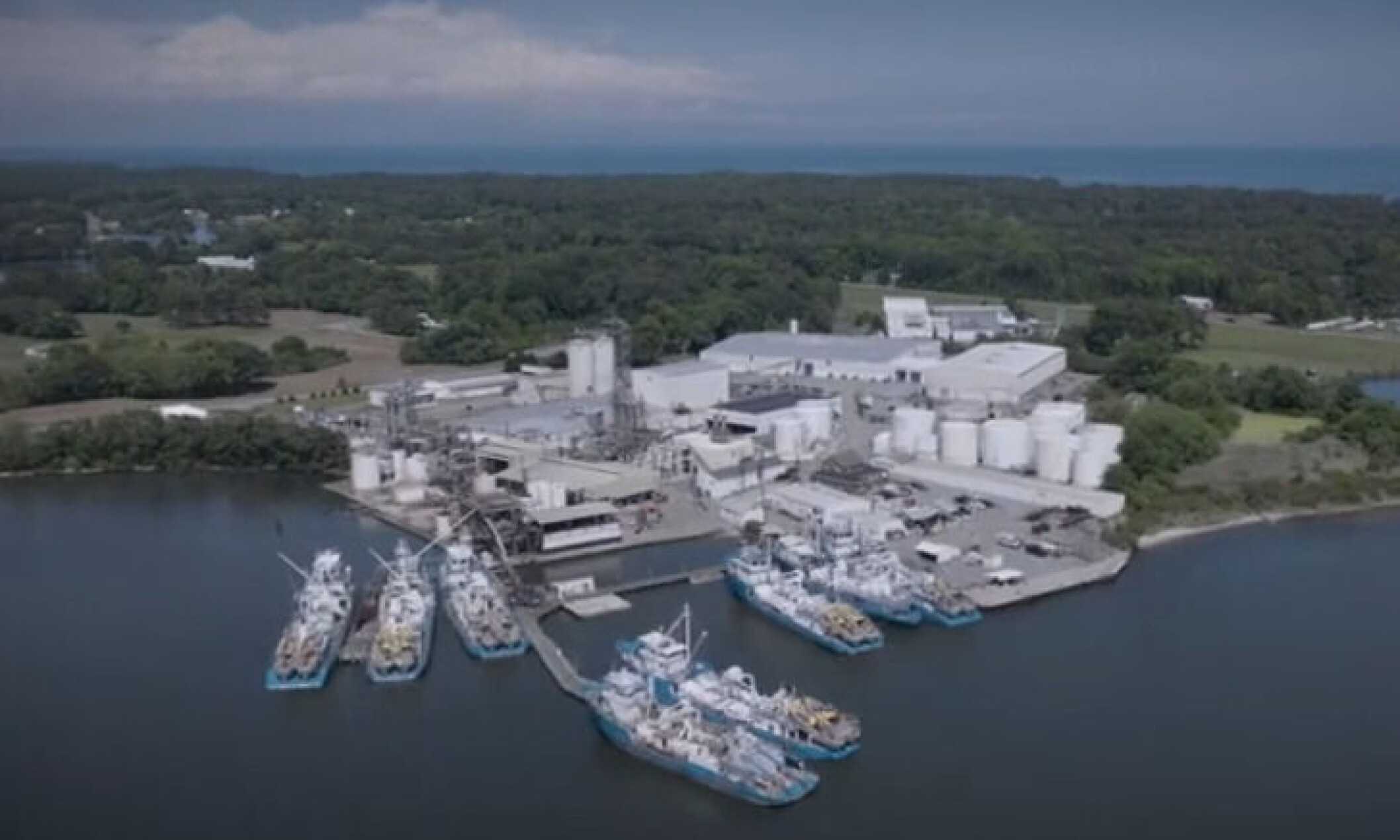
“Menhaden boats at Reedville, Virginia, which is home to both fishing company Ocean Harvesters and Cooke-owned Omega Protein.”
The fishery used to be controlled directly by state lawmakers, making regulatory decisions highly political. Since 2020, it’s been in the hands of the Virginia Marine Resources Commission, a state agency with commissioners appointed by the governor. The renewed public attention led to some proposed new regulations on the industry. A contentious public hearing in late 2022 stretched four hours with impassioned pleas from both sides.
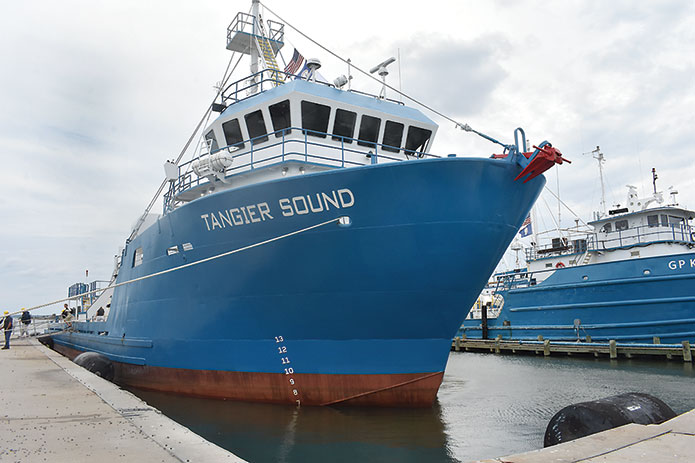
“The brand new $9 million fish steamer Tangier Sound has recently been delivered to Ocean Harvesters in Reedville from Omega Shipyard in Moss Point, Miss. The new vessel is a clear indicator that Virginia’s only reduction menhaden fishery firm plans, despite strong environmental opposition, to continue to fish on Chesapeake Bay and Atlantic Ocean in years to come.”Â
But commissioners ultimately opted not to codify any new restrictions, instead reaching a deal with Omega to harvest less on days when there’s more beachfront activity, like holiday weekends during the summer. Omega argues the industry is already tightly regulated, and points to recent assessments by the Atlantic States Marine Fisheries Commission, which regulates the fishery coastwide, that found the full Atlantic menhaden population is not overfished. Critics are ignoring that data, Diehl said. “They’re not being objective about the fishery,” he said. “They don’t understand the fishery and they’re not listening to the science.”
“The things you need to know, we don’t know”
The science itself is now at the heart of the debate. The Atlantic menhaden population crashed during the 20th century, but has bounced back significantly after new catch limits were imposed in recent decades. “Quite frankly, if this were any other species, I think we’d all be celebrating,” said Rob Latour, a professor at William & Mary’s Virginia Institute of Marine Science, which researches menhaden for state regulators.”
OUT of the MOUTHS of WHALES & DOLPHINS
https://jcaa.org/newsletters/JCNL2504/2504Omega.htm
https://menhadendefenders.blogspot.com/2011/
https://menhadendefenders.blogspot.com/2023/
Greedy fish grinders take 13 million fish (Pounds) right out of the mouths of our local whales and dolphins
by Capt. Paul Eidman, Founder of Menhaden Defenders.org / July 21, 2023
“Just a couple of years ago, Omega Protein Inc, based out of Reedville, Virginia, made a handshake agreement with the folks around the Chesapeake Bay stating that they would avoid fishing Atlantic Menhaden (Bunker) inside the bay as much as possible and fish out in the ocean. In 2019, they reneged on their word and not only fished the bay but fished over their allocation, and the Atlantic States Marine Fisheries Commission (ASMFC) voted Virginia out of compliance. This season, they continued to fish the bunker out of the bay until there weren’t any left to catch, so they headed out to sea.
With its own fleet of planes, Omega searches the waters looking for the massive schools of bunker that gather on the surface and then call in the bunker boats to catch them up with ease. These very skilled pilots can even determine if the schools contain the right size fish and that the school won’t overload the nets. Last week, one of our volunteers alerted me that 4 Omega planes landed in Monmouth County, New Jersey, and another in Long Island NY. Then we watched online as 7 massive Omega ships headed northward at full speed and then stay for 2 days.
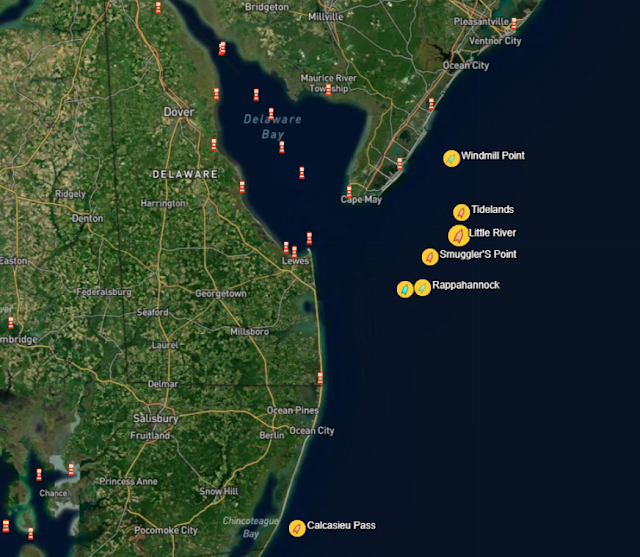
We have been through this before back in 2018, so we knew exactly what was going down. They were going to slam the New York Bight again, a fertile area between New York and New Jersey that is loaded up with bunkers much of the year. Think about this, by July 4th of the 2023 season that started in May, the planes couldn’t find a single school of bunker worth catching between Virginia and New Jersey. Now, if that’s not a sign of fishery management failure, what is? Note that in 2018, they didn’t arrive up here until September. Interesting, that back then they were able to fish the entire summer in the bay and offshore – but clearly, things have changed for the worse.

“Omega vessels in exact fishing positions on Ambrose shipping Channels, on top of the feeding grounds of the Humpback whales and where the Bunker overwintered. If this isn’t an ecologically sensitive area, what is???”
So, Omega captains decide to fuel up 7 ships, and 6 planes, and go on a journey. This bunker reduction business of grinding them up for fish meal and oil must be very profitable! Why else would the Omega fleet take on the expense of steaming 305 miles away and back again from their home base inside the Chesapeake Bay to NY & NJ?

“The Fleeton, 175 feet long x 39 feet wide, can carry 2 million Adult Atlantic Menhaden, just 1 of the 7 vessels to attack the waters off of NY & NJ”
Bunker are known as “the most important fish in the sea,â€� same as the title of Bruce Franklin’s great book on the tortured history of this amazing little forage fish. Reduction fishing has historically taken place from Maine to Florida, but as our knowledge of its harmful impacts on the marine environment has increased – and as the coastwide population decreased – every East Coast state outlawed reduction fishing for menhaden…
Except Virginia
Unfortunately, due to decades of fishing pressure being reduced to Virginia waters and the mid-Atlantic, notably inside the Chesapeake Bay, the localized menhaden population is crashing and the bay is dying. Canadian-based Cooke Seafood bought Omega Protein back in 2017 for $500 million to vertically integrate, and be able to feed the salmon and other fish that they raise in pens all over the world. A big slice of the fish caught are also ground up for the companion pet industry, a protein source, and a flavor enhancer for our beloved dogs and cats.
That’s only two divisions of many; Cooke is a $3 billion dollar-a-year global company and is gobbling up additional companies rapidly. Yes, Cooke is literally vacuuming up America’s key baitfish for export and profit while our coastal ecosystems scramble to find other fish to eat, and small businesses that depend upon the abundance of these fish for commercial and recreational fishing, whale watching, and more take a major hit.

“Just one of the many Salmon pens on the West and
East coast of Canada, fed by American Bunker”
Yes, as per Omega’s public relations rhetoric we hear that the governing management body, the ASMFC has declared that the fishery is “not overfished and overfishing is not occurring�, and everything Omega does is legal and within very constrained regulations. Yet Omega has literally taken all the desired adult fish out of the local waters around Virginia and run out of fish for its own nets. The Chesapeake Bay is the largest estuary on the East Coast. When you hear the word estuary, think nursery.
The bay used to be an idyllic vacation spot, with amazing waters, provide bountiful seafood, a world-class blue claw crab and oyster fishery, and produced over 75% of the fish for one of the largest economic engines of the East Coast, the recreational striped bass fishery. Maryland and Virginia-based small coastal businesses are witnessing a death of a thousand cuts as the Chesapeake Bay as water quality and bounty fade into the past and have the potential to take the entire coastal ecosystem down with it.
The newly implemented ecosystem-based management system for the Menhaden fishery is designed to take every creature in the ecosystem into consideration, in addition to providing sustainable harvest levels for companies like Omega Protein. It took the 7 Omega ships less than 20 hours of fishing to vacuum up, kill and remove 13 MILLION pounds of bait fish out of the NY Bight, within sight of a dozen Humpback whales and Bottlenose dolphins that were actively feeding on them.
Clearly, we cannot rely upon Omega Protein Inc, or Cooke Seafood to be “good stewardsâ€� or for that matter, the Atlantic States Marine Fishery Commission (ASMFC) to manage our coastal waters. Substantial and accurately directed changes are needed to STOP industrialized extraction in environmentally sensitive areas before a coastal ecosystem collapse occurs.”
STOP EATING BAIT
https://menhadendefenders.blogspot.com/2011/
https://newyorkharborchannel.com/save-the-whales-new-york-harbor/
https://newyorkharborchannel.com/if-you-like-manhattan-youll-love-menhaden/
Fishermen & Whales Love Menhaden
by Marc Hittner / August 2, 2020
“The most desired bait for fishermen of Long Island and New Jersey is known as bunker. Bunker is a colloquial name for the species known as the Atlantic Menhaden. Menhaden is a forage fish that is essential for the ocean food web. Unfortunately for them, every larger fish and mammal swimming in the New York Bight (the sea east and south of New York Harbor) thrive on Menhaden. Local fishermen are disturbed to hear that bunker numbers in the Bight diminish because of industrialized fishery as it has a direct correlation on the number of larger game fish populating their favorite fishing spots.
Earlier this decade, the decline was especially traumatic. However, with warmer waters over the past five years, there has been an uptick in the menhaden population. As climate change has moved Caribbean and Gulf water species northward, the entire ecosystem has also shifted in this northerly direction up the U.S. coastline. Most significantly, lobsters off New England have moved into Canadian waters to find the cooler temperatures on the ocean floor.
Recently, warm-water sharks typically abundant off of Florida and the Carolina’s are now visiting Long Island. Of course, another contributing factor is that the sharks may be following the greater numbers of menhaden migrating up to New York and New England. As a result, Americans are getting their lobsters from Canada, tuna fishing boats coming out of Montauk are filled to capacity, and the incidence of shark sightings are breaking records along Long Island beaches.
The whale population in the New York Bight has also been on the increase. More humpbacks are regularly feeding on menhaden. The presence of whales outside of New York City is now commonplace and it is no longer seasonal. Monitoring devices such as the Melville buoy built by the Woods Hole Oceanographic Institute identify humpbacks, sei, fin, and right whales throughout the year.
Finally, just three weeks ago, the American Princess whale watching tour was permitted to re-open as Covid-19 restrictions were lifted. Gotham Whale is a not for profit organization that routinely accompanies the American Princess into the New York Bight to catalog all ocean mammals. Their naturalists are happy to report many sightings so far this year. But there is a war taking place in the waters along the United States East coast. For most of us living in the metropolitan area, we know little about it.
The Atlantic Menhaden has been a staple bounty for one specific company whose trawlers come out of Virginia to cast their nets into the New York Bight. The Omega Protein Company, part of a conglomerate owned by Cooke, a Canadian firm, is responsible for removing millions of menhaden from our waters every year. Menhaden is targeted as it accounts for the greatest source of omega fish oil, livestock feed, and other desirable consumer goods. The main use is for feed for Cooke’s fish farms around the world.
When New York Harbor Channel first interviewed Paul Sieswerda of Gotham Whale three years ago, we learned of his organization’s effort to not only catalog ocean mammals, but reduce the menhaden fishing quota presently allowed by the Atlantic States Marine Fisheries Commission. Like all commercial operations that rely on government regulations, the Menhaden Fisheries Coalition has at least two dozen large ocean fishing companies within its ranks. This organization has traditionally lobbied and influenced the governing body to allow an excessive slaughter of menhaden.
For casual fishing enthusiasts, divers, boaters, and admirers of the sea, it is important to get involved to protect your environment. Establishing a manageable program for forage species of fish is essential. You can sign any number of petitions that have been circulated to help maintain a healthy menhaden population in the New York Bight to allow the ecosystem to thrive. Gotham Whale is dedicated to the sea life that calls the New York Bight home. Here is the link for Gotham Whale’s petition to stop the Omega Fleet from over-fishing our waters.
Gotham Whale is aligned with other ecological preservation groups to prevent the collapse of the species in northern waters such as the Menhaden Defenders. The national organization called the Theodore Roosevelt Conservation Partnership (TRCP) is also concerned with saving the menhaden, with greater emphasis this year in the waters outside the Chesapeake Bay where the fight for menhaden is just as important. TRCP lobbies to influence reduced caps and put in place Ecological Management that will consider the impact on other species by fisheries managers.
These alliances will hopefully bring greater weight to the fight within this decade. In doing so, ocean mammals will no doubt flourish in New York waters and more of us will be able to share their magnificence just outside of New York Harbor. The ask of Gotham Whale is to establish a prohibition of industrialized fishing for menhaden within twenty miles from New York Harbor, an area where we know whales feed. A small step to keep a healthy ecosystem in the New York Bight.
CATCH QUOTA for ENTIRE EAST COAST
https://fishfarmingexpert.com/menhaden-fishing-company-denies-canadian-exploitation
https://menhaden.org/recent-reporting-on-ny-law-misleads-on-menhaden-regulations
https://wydaily.com/menhaden-management-board-votes-to-reduce-2026-catch-quota-for-entire-east-coast/
Menhaden Management Board Votes to Reduce 2026 Catch Quota for Entire East Coast
by Shannon Heckt / November 1, 2025
“Menhaden fisheries along the East Coast will have to reduce how many of the forage fish they catch in 2026 by 20%, or a limit of 186,840 metric tons, after the Atlantic Menhaden Management Board voted this week to make the change to help striped bass populations and other species that depend on the small oily fish. The Virginia-based reduction fishery Ocean Harvesters, which contracts with Omega Protein, will still be subject to the special cap of 51,000 metric tons of menhaden within the Chesapeake Bay’s limits.
Though there are also efforts to try and lower the Bay cap, the amount the fishery can catch in the open ocean will be impacted by the new limit starting next year. “There will likely be some operational adjustments required at our Reedville facility to comply with a 20% harvest reduction; we are evaluating the extent of those changes now,� Ocean Harvesters said in a statement. “Looking ahead, pushing harsher cuts in 2027 and beyond—particularly in the absence of new data— would impose needless harm on working families and a 150-year-old fishery, without ecological justification under the Ecological Reference Point risk analyses.�
Ahead of the meeting, the Menhaden Fisheries Coalition said they would agree to precautionary reductions of no more than 15%. They said that amount would guard against overfishing and protect the incomes of workers at the fisheries. This move comes two years after the board voted to allow an increase in menhaden harvest caps based on stock assessments at the time.
The 2025 assessment shows that menhaden are not over-fished but are below thresholds of producing offspring to maintain the population. Environmental groups like the Chesapeake Bay Foundation have been using the striped bass and osprey populations, which have shown signs of concerning decline, as a proxy for the need to bolster menhaden numbers. Fishermen have reported menhaden entering the Bay in the summer, which is months behind their usual schedule.
Representatives from up and down the East Coast have their own concerns about the forage fish population impacting other seafood species that are economic drivers for their states. Maryland has been pushing back against Ocean Harvesters, claiming the sole reduction fishery in the Bay is harming the state’s seafood and bait industry. Robert Lafrance, a board member from Connecticut, said during the meeting that the group needs “to continue to put pressure on making certain that the science moves forward, and making certain that we have the availability for the species where they need to be again — Maine, Massachusetts, New Hampshire, Rhode Island, that’s where the lobster fishery is.�
The initial proposal for the cap reductions was set at 50%, which fishermen and advocates for the menhaden fisheries said would devastate the industry. A second proposal would have ramped up the reductions over three years, starting at 20% in 2026 and gradually increasing it up to the 50% limit that some studies suggest is needed to protect the striped bass population. “Economically, it’s going to cost jobs, it’s going to cause an issue,� said Joe Cimino, a board member from New Jersey. “With striped bass, we talked about socioeconomic all the time, and this one, we don’t, and that’s kind of strange, considering it has the best stock assessment of any species we deal with. So why is this not also an equally important element to this?�
The final decision was to opt for the 20% next year, which is more than the fisheries wanted and significantly less than conservation groups wanted, and to revisit the cap again at the next annual meeting before the 2027 numbers are determined. “Our understanding of menhaden as a species and of the ecosystem suggests that we need to take a reduction, not just a small reduction, a significant reduction,� said Caitlin Craig, with the New York State Department of Environmental Conservation. “So I would encourage this board to think, just as we were confident in increasing the total allowable catch when the science says we should, that we need to be as willing to take reductions when the science indicates that that’s warranted as well.�
The Chesapeake Bay Foundation, which has been a lead driver for restricting the reduction fishing of menhaden in the Bay, said there is still not enough research into the fish population inside the estuary where they are seeing crab and osprey populations dwindle. “This is nothing more than a performative nod to ecosystem-based fisheries management. The ASMFC failed to fully respond to the science, jeopardizing the ability of menhaden to fulfill their role in the food chain,� Will Poston, CBF forage campaign manager, said. “This lack of meaningful action is not only risky for menhaden, but also the many fisheries and small businesses that depend on a thriving ecosystem.�
The Science Center for Marine Fisheries recently funded a study to investigate the type of research that is needed to understand the scope of the health of menhaden schools in the Bay and if further caps would be needed. There have been multiple efforts in the General Assembly to fund that kind of research that have failed to pass. “New Chesapeake Bay–specific limits are not warranted,� Ocean Harvesters said in a statement. “With SCEMFIS now funding a Chesapeake Bay research roadmap — led by scientists from UMCES’s Chesapeake Biological Laboratory, VIMS, and NOAA — to define what a scientifically defensible, ecologically meaningful Bay cap should look like, the Board should await those results before adding new measures.�
TERRITORIAL WATERS
https://cbf.org/news/virginians-back-reform-industrial-menhaden-fishery-amid-troubling-signs/
https://nationalfisherman.com/virginia-imposing-new-limits-on-menhaden-fleet
Virginia imposing new limits on menhaden fleet
by Larry Chowning / January 12, 2023
“The Virginia Marine Resources Commission (VMRC) voted 5-4 in December to enter into a Memorandum of Understanding with Omega Protein and the bay’s menhaden bait fishery to ban fishing from around the Memorial Day, July 4 and Labor Day holidays. The closure will apply as well on Saturdays and Sundays between Memorial Day and Labor Day, and within a half-mile off the Chesapeake Bay Bridge Tunnel. The MOU calls for the fishery to collaborate with the governor’s office and General Assembly to maintain a buffer along the densely populated areas of the Eastern Shore, Chesapeake Bay and Virginia Beach region.
The menhaden fishery has been on thin ice with Virginia Gov. Glenn Youngkin’s office since summer when there was an Omega Protein purse net tear resulting in thousands of dead, rotting fish washing up on the Bay shoreline. Virginia’s Kiptopeke State Park closed for recreational use during part of July, a peak month for beach tourism. In response thousands of sports fishermen, waterfront landowners and representatives of the state’s tourism economy complained.
Republican Virginia state Delegate Tim Anderson of Virginia Beach recently introduced HB 1383, a menhaden reduction fishing prohibition bill in the 2023 legislative session that opened Jan. 10. The bill would shut down Virginia’s menhaden reduction fishery in all of the state’s territorial ocean waters and inland Bay waters for two years. It would also prohibits VMRC from granting any permit for menhaden reduction fishing for two years until a study could be conducted on the impact of the fishery on the bay’s environment.
Virginia’s Omega Protein, owned by Cooke Inc. of Saint John, New Brunswick Canada, is the last reduction menhaden fish company operating on the East Coast. The reduction menhaden fishery was once widespread with many menhaden firms located from Maine to North Carolina. There is still a strong reduction fishery operating in the Gulf of Mexico. Virginia’s menhaden fishery is 148 years old. Proponents for the fishery argue that the real issue is “user conflicts� claimed by recreational fishing groups, when actually there has been very little conflict, they say. Recreational fishermen and environmental opponents argue that there is an enormous ecological value in menhaden that is being compromised by the menhaden reduction fishery.
At public hearing on the legislation, it was stated that the Atlantic States Marine Fisheries Commission recently increased the coast wide menhaden quota by 20 percent after concluding the population is healthy. Virginia Institute of Marine Science professor Rob Later, however, said menhaden landings coast wide have fallen to less than 50 percent of the 700,000 metric tons of landings that occurred at its peak and rockfish (striped bass) populations have been overfished. The health of the rockfish population is directly tied to menhaden as striped bass feed off the oily menhaden. The outcome of this matter may well be resolved in one way or another in the coming days inside the halls of Virginia’s Legislative sessions.”
PREVIOUSLY
DRUGGING the FOOD CHAIN
https://spectrevision.net/2021/07/28/drugging-the-food-chain/
GREENER DRUGS
https://spectrevision.net/2024/06/21/greener-drugs/
SELF-GOVERNING COMMONS
https://spectrevision.net/2021/09/03/self-governing-commons/
