
“Shells of two different species of sea snail: on the left is the normally sinistral (left-handed) shell of Neptunea angulata, on the right is the normally dextral (right-handed) shell of Neptunea despecta“
CHIRAL FLIPS
https://quantamagazine.org/cosmic-rays-explain-lifes-bias-for-right-handed-dna
https://quantamagazine.org/why-fossil-shells-flip-their-spirals-every-few-millennia
Why Do These Fossil Shells Flip Their Spirals Every Few Millennia?
by Fanni Daniella Szakál / September 11, 2026
“For thousands and sometimes millions of years, marine plankton all over the world built their spiral shells in one direction. Then, suddenly, the spirals switched direction at the same time, everywhere, only to switch back again later. These microorganisms are types of foraminifera, or forams. Found in all oceans, from the tropics to high latitudes, they’re among the most abundant eukaryotic organisms on Earth. The single-celled protists secrete a hard shell perforated with many small holes; most species live on the seafloor, while some are planktonic, at the mercy of currents. When they die, their shells blanket the seafloor across the world, forming a natural archive of Earth’s history that goes back some 560 million years.
By studying the composition of species, or measuring isotopes or trace elements, scientists use accumulated foram shells to reconstruct past climates and ocean conditions. Over the years, they have noticed a strange phenomenon. Among the many planktonic forams that have snail-like coiled shells, some species strongly prefer one spiral direction — left or right — over the other, with as many as 97% of the individuals in a species coiling in the same direction. And sometimes, a new coiling direction dominates seemingly everywhere across the oceans all at once in the fossil record. Ever since the 1950s, when this curiosity was observed, scientists have been trying to figure out what might cause shell direction to change in quadrillions of microorganisms in unison.
Recently, micropaleontologists integrated and synthesized data on the shell-coiling direction, or chirality, of several species from case studies of forams dating back as far as 56 million years. Some researchers speculated that the shell flips were connected to changes in temperature or other climate factors. The new study, however, hypothesizes that shell direction is not itself an adaptive response, but rather is an accidental marker of a significant evolutionary event that starts in a small subpopulation and then sweeps across vast ocean basins.

“These fossils from the extinct foram Globorotalia limbata, which lived 11 to 2 million years ago, illustrate right- and left-handed chirality in shell coiling.”
“It’s probably one of the first times that people who usually do more biostratigraphy — basically, deep-time research — on foraminifera are approaching such a question,” said Julie Meilland, a researcher at the Cerege, a research institute in France, who was not involved in the study. In addition to data on coiling direction from multiple species going back millions of years, the study incorporates insights from modern foram genetics and biology. “It was very refreshing to see these worlds connect because very often people doing more modern research don’t necessarily connect to people doing deep-time research,” Meilland added. The work offers a new perspective on a decades-old mystery and a rare glimpse into an obscure process that enables new traits to sweep across large populations.
The phenomenon of the flipping forams was first described in the early 1950s, when advances in seafloor coring techniques allowed researchers to analyze accumulated layers of shells. The Swiss micropaleontologist Hans Bolli first noted that among forams with coiled shells, several species had a directional preference, and that sometimes this preference changed through time. An explanation for this curious occurrence came from a seminal 1959 study, for which the marine geologist David Ericson, a core specialist at Columbia University’s Lamont Geological Observatory (now the Lamont-Doherty Earth Observatory), sifted through hundreds of coiled shells from the species Neogloboquadrina pachyderma collected from the North Atlantic. Ericson observed that in cold climates during the ice ages, the shells tended to coil left, while during warmer periods they turned right. He wasn’t sure why coiling direction would relate to climate, but he speculated that temperature was this species’ determining factor. However, as more cores were retrieved from around the globe, and with advances in genetics, the temperature hypothesis didn’t hold up.

“Kate Darling, an honorary professor at the University of Stirling, has studied the genetics and evolution of forams for decades. “Flipping, in my opinion, means they’ve speciated,” she said. Courtesy of Ian Darling”
In 2006, Kate Darling, now an honorary professor at the University of Stirling, published genetic work showing that the variants of N. pachyderma are, in fact, two distinct species, each with its own coiling direction. Then, in 2013, the evolutionary paleobiologist Yurika Ujiié, now a professor at Kochi University in Japan, found that shell chirality in different foram species, collected from multiple oceans, did not correspond to temperature. Each study countered Ericson’s hypothesis in a different way. Plus, it was hard for many researchers to imagine what advantage coiling direction would offer a single-celled organism with no obvious handedness.
Half a century after Ericson’s initial observation, the driving force behind the flips once again became a mystery. It wouldn’t take long to pique another researcher’s interest. Bridget Wade, a micropaleontologist at University College London, had been studying sediment cores for decades when her team noticed a curious pattern. Several foram species seemed to flip their shell direction around the same time at different latitudes in the Atlantic, Indian, and Pacific oceans. In one species, the flips seemed almost instantaneous in the tropics as well as in higher latitudes. This evidence that the phenomenon extended far beyond a single ocean basin suggested a global process with more than temperature at work.
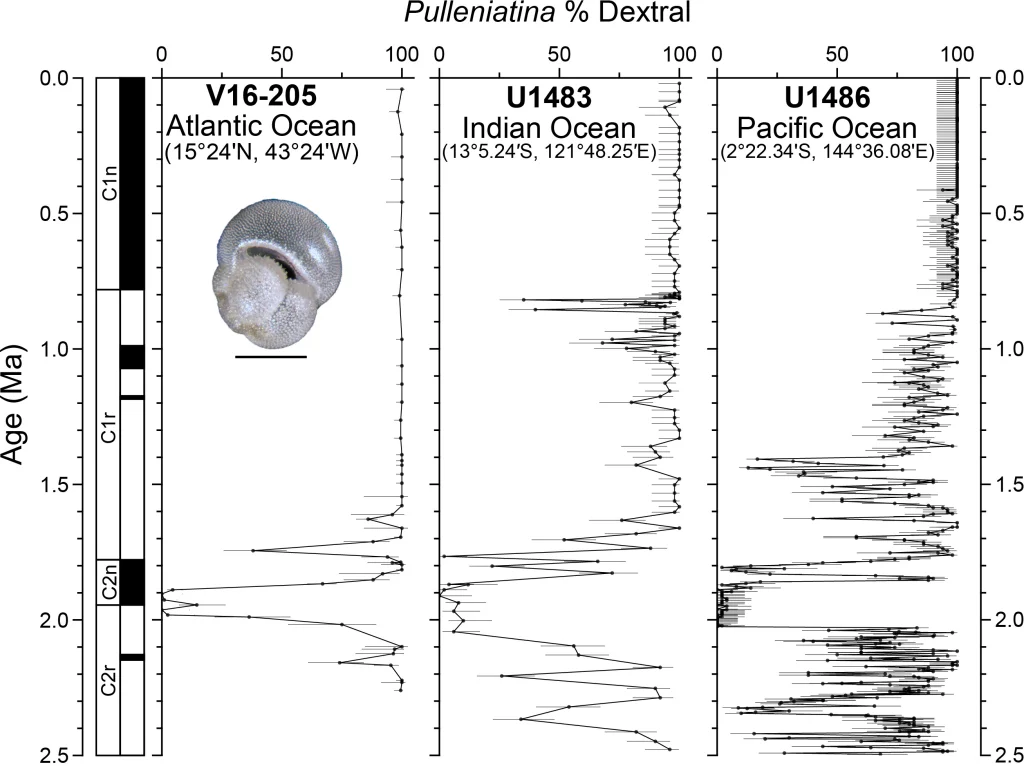
To sate their curiosity, Wade’s team synthesized data from five decades of studies and analyzed changes in coiling patterns in several planktonic foraminifera species from the past 56 million years. For each species, they found evidence of flipping across multiple ocean basins and climate belts. Paragloborotalia siakensis changed from mixed to left-handed coiling 15 million years ago. Globorotalia scitula flipped twice: from mixed to left-handed 15 million years ago, and then to right-handed 10 million years ago. “It seems truly puzzling that a species could exist for millions of years coiling one way, and then suddenly reverse, for no apparent reason,” the authors wrote.

“Bridget Wade, a micropaleontologist at University College London, points to a species of foram she described at the Smithsonian Museum of Natural History.”
Pulleniatina obliquiloculata was an especially useful example, Wade said: It has an exceptionally detailed fossil record, is still living today, and occurs throughout tropical oceans worldwide. For the past 860,000 years, its shell has coiled almost exclusively to the right. But before that, it went through a sequence of rapid shell-coiling flips that occurred globally every few thousand years. The shifts were far too sudden and widespread to be explained by gradual evolution. “That was quite a surprise because if it was a local event, it would be easier to think about a local, changing environment,” Wade said. The fact that it was happening everywhere suggested a different process at work.
What could explain the worldwide sweep of a chirality switch? Wade knew that despite their apparent uniformity, oceans hide many distinct habitats that differ in temperature, currents, ultraviolet light, chemistry, and oxygen. Likewise, an apparently global population of a foram species can hide cryptic species. Genetic studies have revealed that often what was considered a single species, based on shell shapes (including coiling direction), was in fact more than one. What if, her team hypothesized, one of these cryptic species developed some broad adaptive advantage. This cryptic species might spread across the globe, carried by ocean currents and its own success, in a gigantic population sweep — and bring a single coiling direction to dominance along the way, thereby preserving the event in the fossil record.

“Unlike shelled species most familiar to us, forams do not live fully inside their shell. The perforated shell sits beneath the cell membrane and is engulfed by jelly-like protoplasm. All the specimens here are smaller than 1 millimeter. Biogeosciences 16, 3377-3396 (2019)“
“Flipping, in my opinion, means they’ve speciated,” said Darling, who was not involved in Wade’s study. Whether the flipped forams are a new species or a genetic variant, they would need to have a significant advantage over other forams to sweep all around the world. “It’s a bit like how Covid-19 variants became really abundant in one place,” Wade said, “and then had a slight fitness advantage over another genetic variant” and rapidly spread to become the dominant strain in virtually every country on Earth. However, Ujiié cautioned against assuming any simple relationship between a species’ genetic identity and its shell chirality. “Coiling direction appears to have a genetic basis,” she said, “but it does not necessarily mean that dextral [right-coiling] and sinistral [left-coiling] individuals represent separate genetic populations.”
It’s still unclear why an entire population would coil the same way in the first place; it happens only in a subset of planktonic foram species with coiled shells. In other species, shells coil in both directions in a roughly 50-50 split. So why do some have a strong chiral bias? The only thing the scientists seem to agree on is that they don’t know yet. Meilland, who studies reproduction in live cultures of forams, has observed that ratios of coiling directions in her cultures don’t necessarily match what one would expect to find in the wild, based on fossil studies. She thinks that the drivers of coiling direction could be rather complex. “I think there could be something with genes, with the recombination, with them trying to evolve, with the environment, and also with luck and just life,” she said.
While the near synchronicity of the worldwide foram flips might seem puzzling, Darling and Ujiié pointed out that what appears instantaneous in the fossil record might unfold over 1,000 years or more in real time. Over that period, ocean waters circulate around the entire globe. Water masses also change and move, which could speed up the spread of a new variant. It’s possible that traits or species of other marine organisms can also sweep the globe this way. But it would be difficult to observe without a clear fossil marker, such as the forams’ shell chirality. These coiling flips are therefore a rare window into how evolutionary processes can play out on a global scale.”
MIRROR-IMAGE ASYMMETRY
https://www.quantamagazine.org/chiral-key-found-to-origin-of-life-20141126/
https://www.quantamagazine.org/magnetism-may-have-given-life-its-molecular-asymmetry-20230906/
Magnetism May Have Given Life Its Molecular Asymmetry
by Yasemin Saplakoglu / September 6, 2023
“In 1848, when Louis Pasteur was a young chemist still years away from discovering how to sterilize milk, he discovered something peculiar about crystals that accidentally formed when an industrial chemist boiled wine for too long. Half of the crystals were recognizably tartaric acid, an industrially useful salt that grew naturally on the walls of wine barrels. The other crystals had exactly the same shape and symmetry, but one face was oriented in the opposite direction. The difference was so stark that Pasteur could separate the crystals under a magnifying lens with tweezers. “They are in relation to each other what an image is, in a mirror, in relation to the real thing,” he wrote in a paper that year.
Though Pasteur didn’t know it, in the crystallized dregs of that wine, he had stumbled across one of the deepest mysteries about the origins of life on Earth. What he was seeing was a mixture of tartaric acid molecules that had identical atomic compositions and mirror-image arrangements of those atoms in space. They had the property later called “chirality” after the Greek word for “hand”: Just as our left and right hands are symmetrical opposites of each other, the left- and right-handed versions (or enantiomers) of the tartaric acid molecules are distinct and nonequivalent.
The significance of Pasteur’s observation went beyond the discovery of chirality — there was also the remarkable reason he was seeing it. The synthetic crystals were a mixture of the tartaric acid enantiomers because the boiling process allowed left- and right-handed versions to form in equal numbers. But in the natural crystals from wine barrels, all the tartaric acid molecules were right-handed — because the grapes used for the wine, picked from living vines, only made that enantiomer. Chirality is a signature of life as we know it. Over and over, biochemists have found that when living cells use chiral molecules, they use one chirality exclusively. The sugars that make up DNA, for example, are all right-handed. The amino acids that make up proteins are all left-handed. If the wrong enantiomers slip into pharmaceuticals, the effects can sometimes be toxic or even lethal.
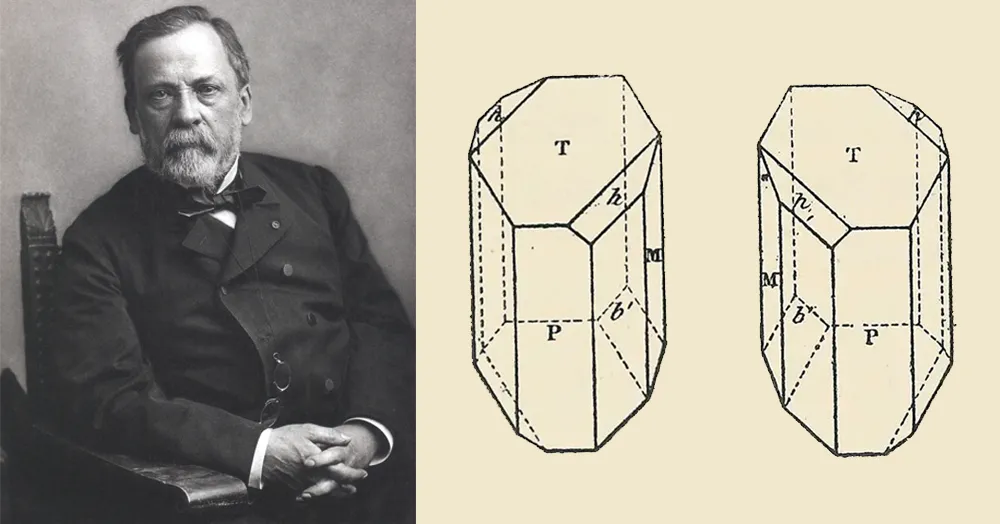
“The French chemist Louis Pasteur (left) drew this illustration in 1848 to depict how the crystals of the mixture now called paratartaric acid are symmetrical but not superimposable. That property later became known as chirality.”
Some event or series of events early in the history of life must have “broken the mirror,” as biochemists put it, throwing life into molecular asymmetry. Scientists have debated why life became homochiral, and whether it needed to happen or if it was purely a fluke. Were chiral preferences impressed on early life by biased samples of molecules arriving from space, or did they somehow evolve out of mixtures that started out as equal parts right- and left-handed? “Scientists have been mystified by this observation,” said Soumitra Athavale, an assistant professor of organic chemistry at the University of California, Los Angeles. “They’ve come up with all sorts of proposals over the years, but it’s difficult to come up with proposals which are actually relevant geologically.” Moreover, while many theories could explain why one type of molecule might have become homochiral, none of them explained why whole networks of biomolecules did.
Recently, a group at Harvard University published a series of papers that present an intriguing solution for how life’s homochirality emerged. They suggest that magnetic surfaces on minerals in bodies of water on the primordial Earth, charged by the planet’s magnetic field, could have served as “chiral agents” that attracted some forms of molecules more than others, kicking off a process that amplified the chirality of biological molecules, from RNA precursors all the way to proteins and beyond. Their proposed mechanism would explain how a bias in the makeup of certain molecules could have cascaded outward to create a vast network of chiral chemistry supporting life. It’s not the only plausible hypothesis, but “it’s one of the coolest because it ties geophysics to geochemistry, to prebiotic chemistry, [and] ultimately to biochemistry,” said Gerald Joyce, a biochemist and president of the Salk Institute who was not involved in the study. He is also impressed that the hypothesis is backed by “actual experiments” and that “they’re doing this under realistic conditions.”
The roots of the new theory about homochirality reach back almost a quarter century to when Ron Naaman, a professor of chemical physics at the Weizmann Institute of Science in Israel, and his team discovered a critical effect of chiral molecules. Their work focused on the fact that electrons have two key properties: They carry a negative charge, and they have “spin,” a quantum property analogous to intrinsic clockwise or counterclockwise rotation. When molecules interact with other molecules or surfaces, their electrons can redistribute themselves, polarizing the molecules by creating a negative charge at their destination and a positive charge at their starting point.

“Ron Naaman of the Weizmann Institute of Science in Israel discovered the CISS effect in 1999. Its applications and biological significance have continued to emerge since then.”
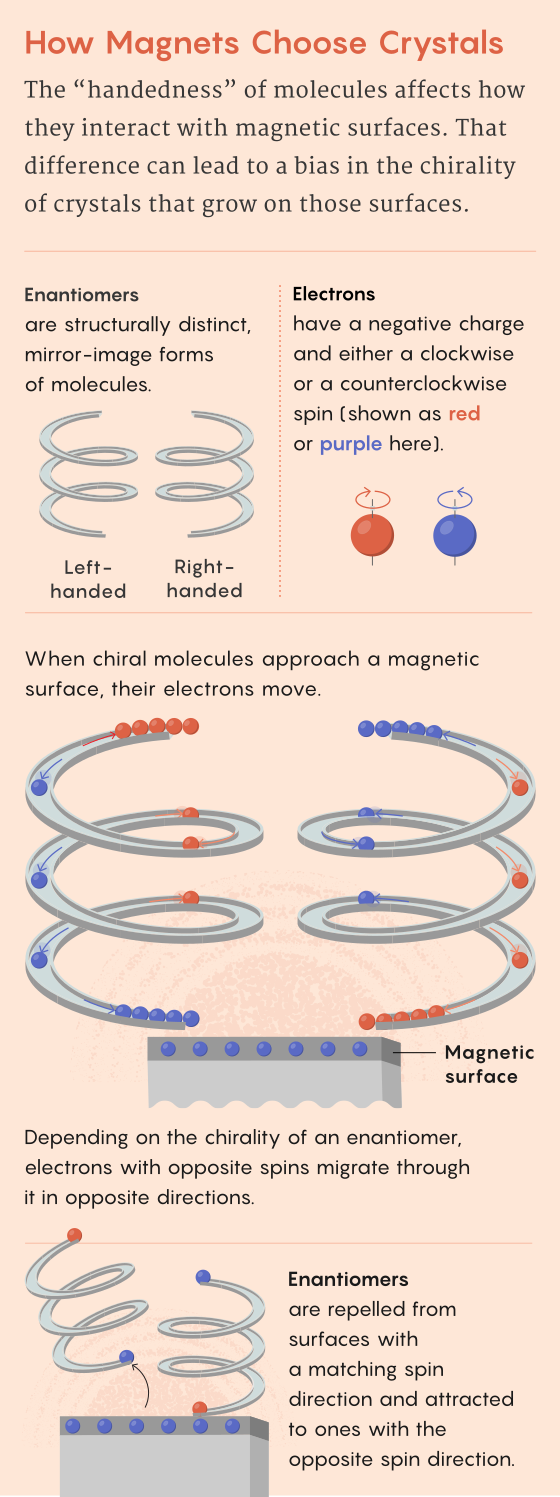
Naaman and his team discovered that chiral molecules filter electrons based on the direction of their spin. Electrons with one spin orientation will move more efficiently across a chiral molecule in one direction than the other. Electrons with the opposite spin move more freely the other way. To understand why, imagine throwing a Frisbee that glances off the wall of a hallway. If the Frisbee hits the right-hand wall, it will bounce forward only if it’s rotating clockwise; otherwise, it will bounce backward.
The opposite will happen if you hit the Frisbee off the left-hand wall. Similarly, chiral molecules “scatter the electrons according to their direction of rotation,” Naaman said. He and his team named this phenomenon the chiral-induced spin selectivity (CISS) effect. Because of that scattering, electrons with a given spin end up aggregating at one pole of a chiral molecule (and the right-handed and left-handed versions of the molecule gather opposite spins at their respective poles). But that redistribution of spins affects how the chiral molecules interact with magnetic surfaces because electrons spinning in opposite directions attract one another, and those spinning in the same direction repel one another.
Consequently, when a chiral molecule approaches a magnetic surface, it will be drawn closer if the molecule and the surface have opposite spin biases. If their spins match, they will repel each other. (Because other chemical interactions are also going on, the molecule can’t simply flip to realign itself.) So a magnetic surface can act as a chiral agent, preferentially interacting with only one enantiomer of a compound. In 2011, in collaboration with a team at the University of Münster in Germany, Naaman and his team measured the spin of electrons as they moved through double-stranded DNA, confirming that the CISS effect is both real and strong. That’s when research into the effect and its possible applications “started to boom,” Naaman said. He and his team, for example, developed several ways to use the CISS effect to remove impurities from biomedicines, or to exclude the wrong enantiomers from drugs to prevent major side effects. They’ve also explored how the CISS effect might help to explain the mechanisms of anesthesia.
But they only began working seriously on the idea that the CISS effect plays a part in the rise of biological homochirality after they were invited to collaborate on a hypothesis by a team at Harvard led by the astronomer Dimitar Sasselov and his graduate student S. Furkan Ozturk. Ozturk, the young lead author on the recent papers, came across the homochirality problem in 2020 when he was a physics graduate student at Harvard. Unhappy with his research on quantum simulations using ultracold atoms, he flipped through a science magazine detailing 125 of the biggest mysteries in the world and learned about homochirality. “It looked really like a physics question because it’s about symmetries,” he said. After reaching out to Sasselov, who is the director of Harvard’s Origins of Life Initiative and who was already interested in the question of homochirality, Ozturk switched over to become a student in his lab.
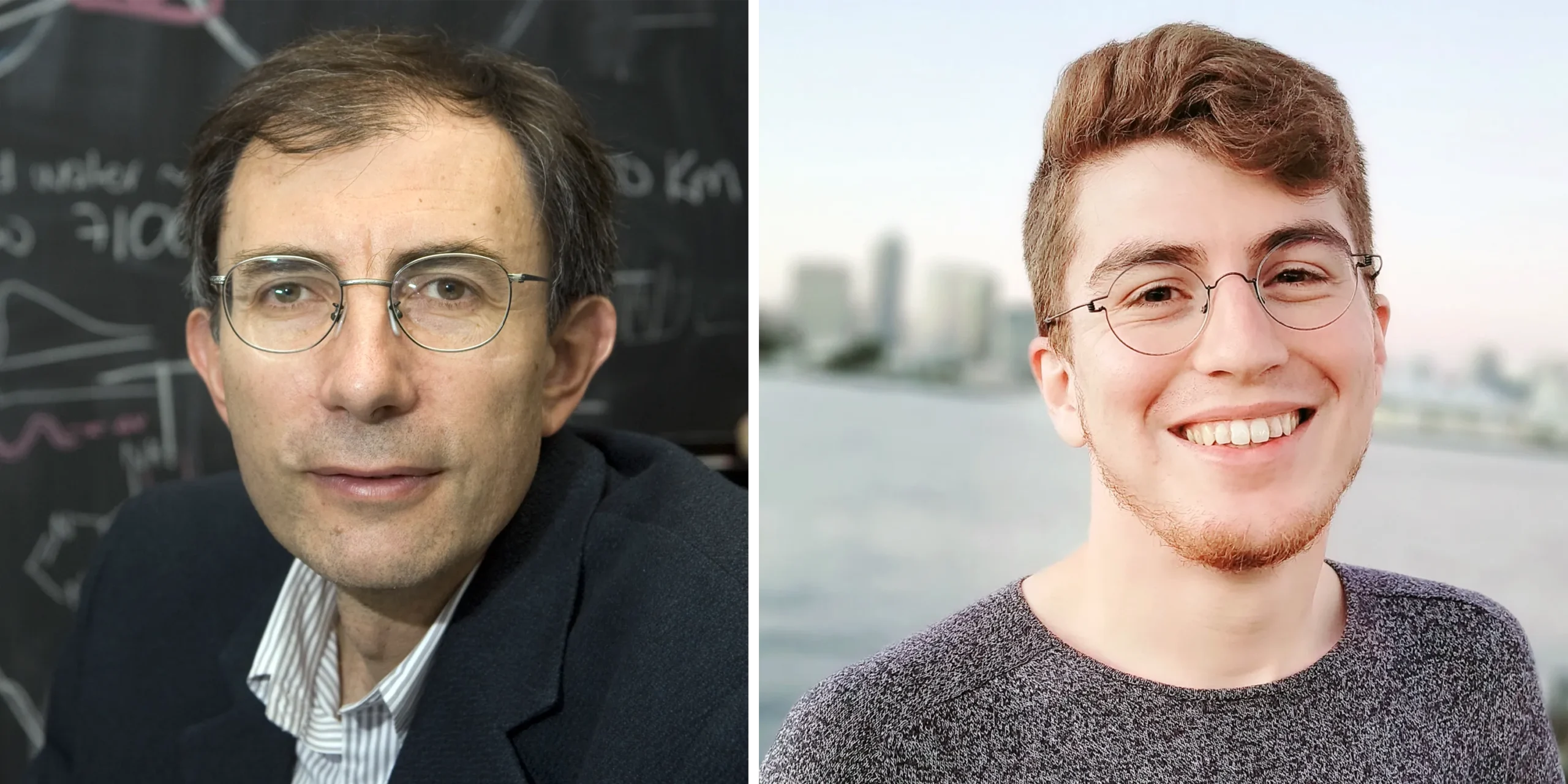
“Dimitar Sasselov (left) and Furkan Ozturk at Harvard University led experiments that suggested magnetic surfaces in lakes could have imposed homochirality on vital biomolecules at the beginning of life’s history.”
Ozturk and Sasselov soon hit on an idea based on the CISS effect. They imagined a primordial setting like a shallow lake where there were surfaces full of magnetic minerals and the water contained a mixture of chiral precursors to nucleotides. They theorized that ultraviolet light could have ejected many electrons from the magnetic surfaces, and many of those electrons would have had the same spin. The ejected electrons might then have interacted preferentially with specific enantiomers, and the resulting chemical reactions might then have preferentially assembled right-handed RNA precursors.
In April 2022, Ozturk traveled to Naaman’s lab in Israel, thrilled by the prospect of testing their hypothesis. His excitement was short-lived. Over the next month as he worked with Naaman, the idea fell apart. It “did not work,” Ozturk said, and so he returned home, dejected. But then Ozturk had another idea. What if the CISS effect wasn’t manifesting as a chemical process but as a physical one? Naaman’s group had shown that they could use magnetic surfaces to crystallize enantiomers preferentially. And crystallization would be the easiest way for purified collections of enantiomers to assemble.
Ozturk mentioned that to John Sutherland, their collaborator at the MRC Laboratory of Molecular Biology in the U.K. “And I said, drop everything to do with electrons and just focus on the crystallization,” Sutherland said. Sutherland was excited by the crystallization aspect because he and his team had already independently discovered that an RNA precursor called ribo-aminooxazoline (RAO) can synthesize two of the four building blocks of RNA. RAO also “crystallizes beautifully,” Sutherland said. Once a crystal seed forms from the enantiomer that is attracted to the surface, the crystal preferentially grows by incorporating more of the same enantiomer. Ozturk remembers Sutherland telling him that it would be “game over” if the CISS effect idea worked. “Because it was so simple,” Ozturk said. “It was doing it on a molecule that was so central to the origin of life chemistry that if you can manage to make that molecule homochiral, you can make the entire system homochiral.” Ozturk got to work in the Harvard lab. He put magnetite surfaces onto a petri dish and filled it with a solution containing equal amounts of left-handed and right-handed RAO molecules. He then put the dish on a magnet, put the experiment in the fridge and waited for the first crystals to appear. At first, the team found that 60% of the crystals were single-handed. When they repeated the process, their crystals were 100% of the same chirality.
As they reported in a study published in June in Science Advances, if they magnetized the surface one way, they created crystals that were purely right-handed; if they magnetized it the other way, the crystals were purely left-handed. “I was very surprised, because I’m super familiar with experiments that do not work,” Ozturk said. But this one “worked like a charm.” Behind his desk, Ozturk keeps the empty bottle of champagne that Sasselov and the team shared at a celebratory dinner.
But they still had a major problem: The magnet they used in their experiment was about 6,500 times stronger than Earth’s magnetic field. So Ozturk returned to the Weizmann Institute last November, and he and Naaman then worked on a follow-up experiment in which they didn’t use an external magnetic field at all. Instead, they found that when the chiral molecules were adsorbed onto the magnetic surfaces, they created a highly local magnetic field over the surface that was up to 50 times as strong as Earth’s magnetic field. Their findings have been accepted by a peer-reviewed journal but not yet published. “You’re coercing the neighborhood to be magnetized, which makes it even easier for the crystals to keep forming,” Joyce said. That self-perpetuating effect makes the scenario plausible, he added. Athavale agrees. The fact that you don’t need a highly magnetic field for the CISS effect to occur is “really nice, because now you have seen a possible geological setting,” he said.
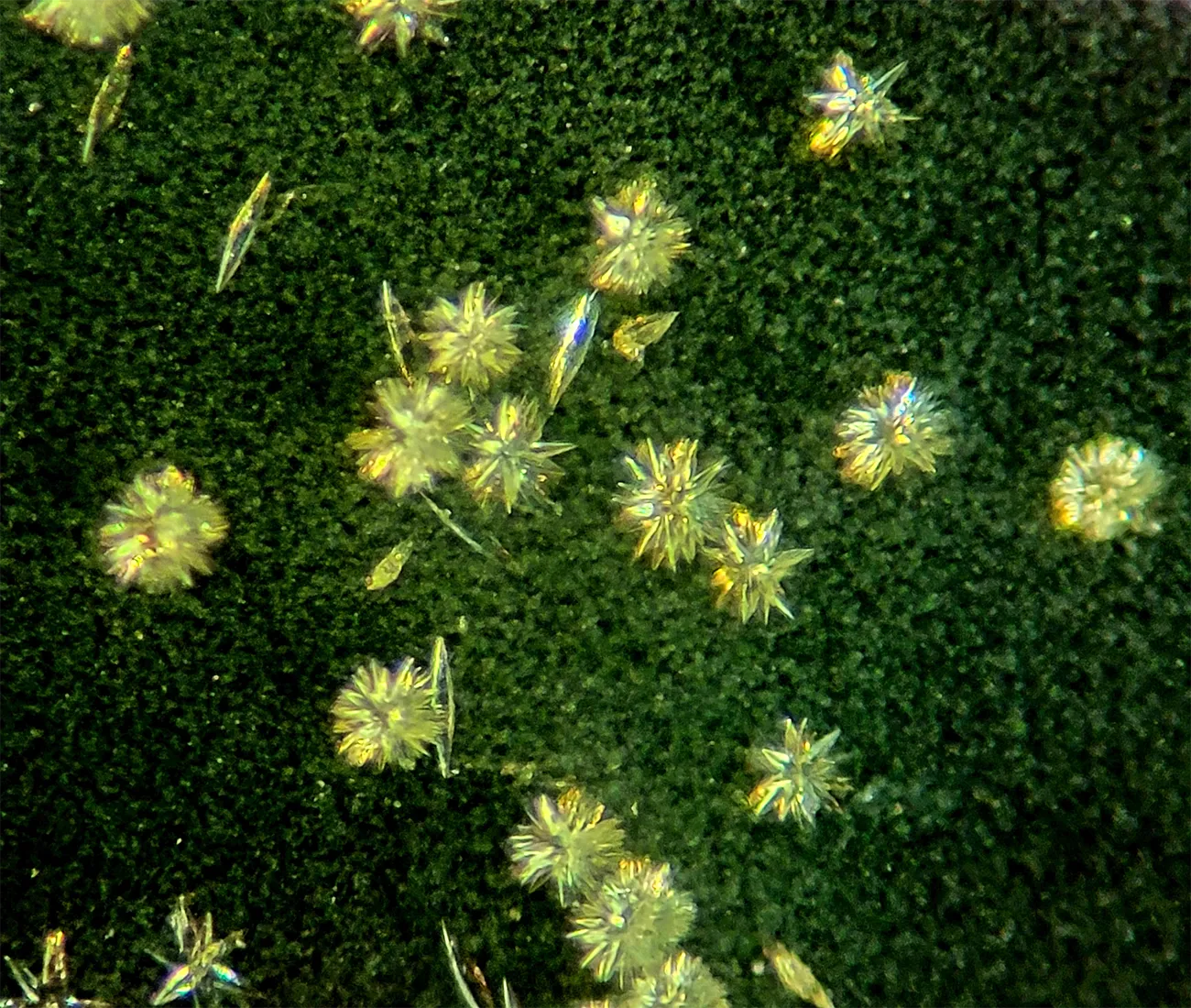 “On a magnetic surface, crystals of an RNA precursor called RAO
can form as either left- or right-handed structures. S. Furkan Ozturk”
But the real key to creating homochirality is to look at how the effect could have been amplified across a network of interacting molecules. “The most important aspect of all this is not that we managed to find yet another way to get a chiral product,” Sasselov said, but that his group had found a route to creating a homochiral network. In a paper featured on the cover of The Journal of Chemical Physics in August, Ozturk, Sasselov and Sutherland proposed a model for how chiral information might propagate across a prebiotic network. Sutherland and his group had previously shown that analogs of right-handed transfer RNA molecules — which bind amino acids and bring them to the ribosome to make proteins — link to left-handed amino acids 10 times faster than to right-handed ones. The finding suggests that chiral RNA preferentially makes proteins of the opposite chirality, as is seen in nature. As the researchers wrote in the paper: “Therefore, the biological homochirality problem may be reduced to ensuring that a single common RNA precursor (e.g., RAO) can be made homochiral.”
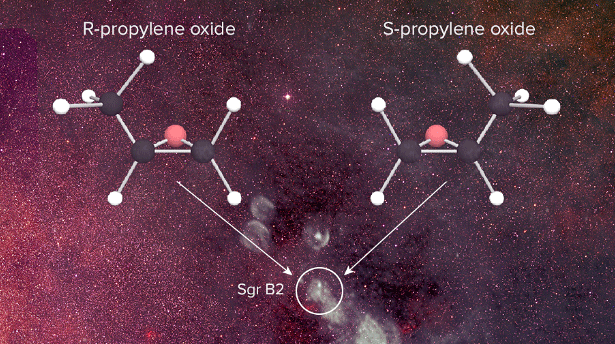
“Scientists have found a chiral molecule, propylene oxide,
in a star-forming region called Sagittarius B2.”
The study didn’t directly explain why life’s preferred nucleotides are right-handed and its amino acids are left-handed, Ozturk said. But these new findings suggest that the determining factor was the magnetization induced by the Earth’s field. Athavale noted that even if the crystallization process happened in 100 primordial lakes, Earth’s magnetic field would ensure that they all produced precursors with the same handedness rather than a mixture. Joyce noted that there’s a “cool little twist” if the magnetic field gave such a bias: If life started in the northern hemisphere and favored molecules with one handedness, then it would have shown the opposite handedness if it had arisen in the southern hemisphere. The propagation of chirality between families of molecules is still highly hypothetical, Athavale noted, though it’s good to get people thinking. Sasselov agrees. “The idea of this paper is to motivate people to go and do these experiments,” he said.
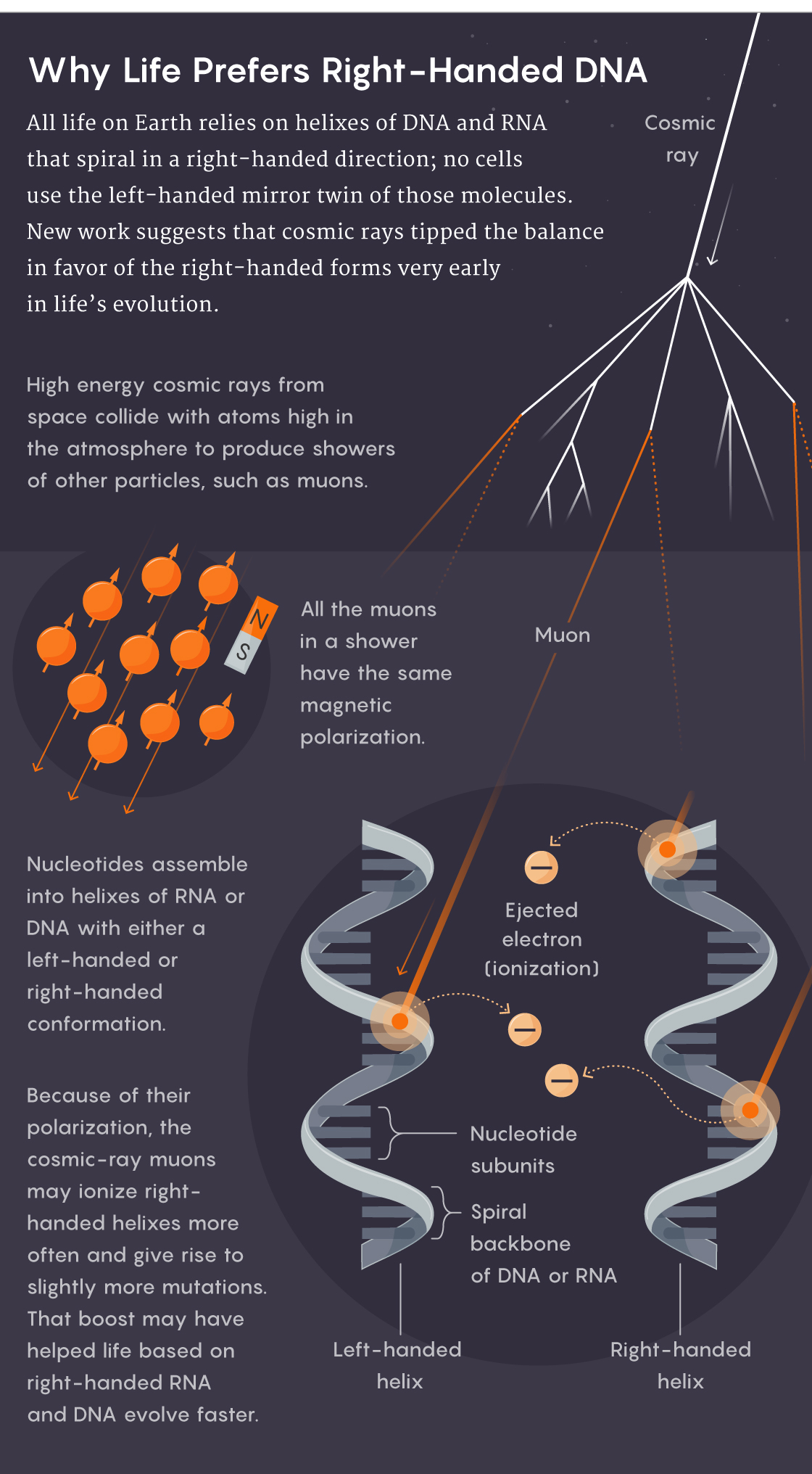
“Lucy Reading-Ikkanda; Courtesy of Simons Foundation (adapted by Quanta)”
Wentao Ma, an origins-of-life researcher at Wuhan University in China, said that the new papers mark “interesting progress.” But he would need to see the CISS effect lead to the polymerization of RNA to see it as a complete answer. “If they can achieve this result, I think we’re not far away from the … solution,” he said. “I really like the CISS effect,” said Noémie Globus, an astrophysicist who is working on the homochirality problem. What would be more persuasive, she said, would be for the researchers to check whether meteorites containing an excess of amino acids with a particular handedness (which have been found before) also contain excess magnetic particles. She also noted that different theorized mechanisms could all have been creating homochirality in different molecules. Jeffrey Bada, an emeritus professor at the Scripps Institution of Oceanography at the University of California, San Diego, is skeptical of the idea. He doesn’t believe that RNA could have been synthesized in primordial conditions as the first self-replicating molecule. “No one’s made RNA in a prebiotic context,” he said, because there are too many issues with the stability of the molecule.
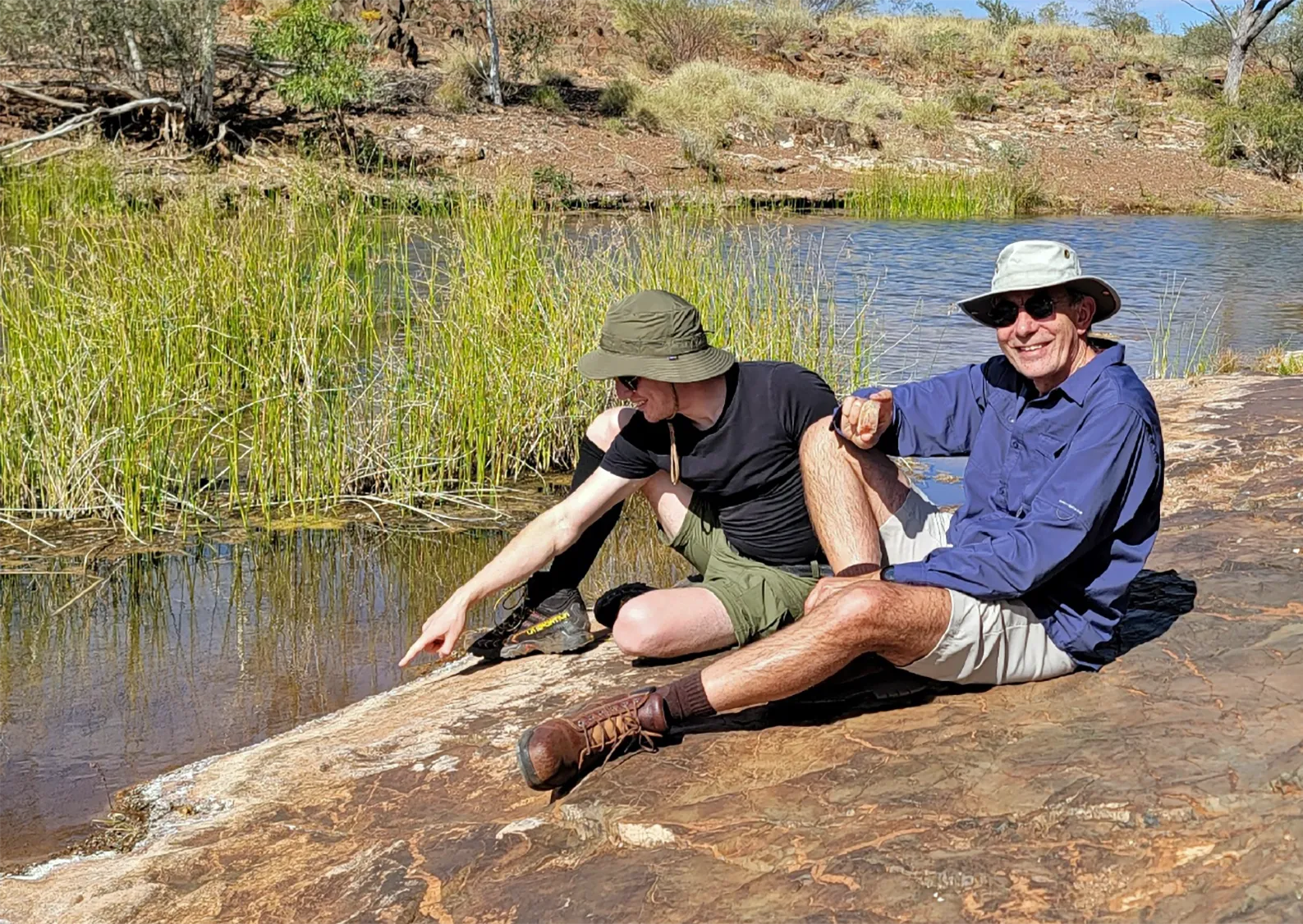
“Ozturk and Sasselov survey a site in Pilbara, Australia, which they think might resemble the prebiotic lake in their hypothesis.”
Sutherland’s team is still working to show that the other two types of nucleotides can be made from the RNA precursor molecule. “I think we’re pretty damn close,” Sutherland said. “But my group will tell you that I’ve been saying that for 22 years.” Whether the CISS effect represents the solution, part of the solution or no solution at all, there are obvious next steps to testing it. “It’s got all the aspects of a nice hypothesis where you’re coming up with something creative, something which is feasible, and then something which can ultimately be tested,” Athavale said. The most convincing next step, he thinks, would be to show geological evidence that the process could have happened outside the lab. Over a Zoom call, Ozturk held up a flat black rock that he had picked up on a trip to Australia, a place filled with magnetic iron rocks on which he’s hoping to replicate his experiments. He also wants to make future tests of the idea more dynamic: The primordial lakes where he thinks the early molecules formed would have had streams and flows of material, as well as natural “wet-dry” cycles driven by rains and high temperatures, that would allow crystals to form and dissolve, form and dissolve.
Though the mystery of homochirality is far from settled, Ozturk has received some enthusiastic encouragement from his mentors for his work on the CISS effect explanation. In April, he gave a talk at Harvard about the Sasselov group’s research, and one of his idols attended. Matthew Meselson, a geneticist and molecular biologist who experimentally confirmed how DNA is replicated, sat in the front row as Ozturk wrote out his findings on a chalkboard. The 93-year-old geneticist told Ozturk afterward that he was so glad he had lived long enough to see this problem being solved. He later gave Ozturk a signed copy of one of his books. “Already you have solved a deep problem,” he wrote in it. “I wish you the best fortune.”
PREVIOUSLY
SHADOW BIOSPHERE
https://spectrevision.net/2022/06/02/shadow-biosphere/
PALEOMAGNETISM
https://spectrevision.net/2010/03/05/did-you-feel-that/
AURORAL CURRENT
https://spectrevision.net/2009/09/04/auroral-current/
