ROYAL AFRICAN COMPANY
https://thetimes.com/butchered-bible-promoted-slavery-church
https://theguardian.com/kings-and-queens-who-profited-from-slavery
https://theguardian.com/register-of-british-slave-traders
“…Of the thousands of British slave traders identified in the register, some are household names: King James II, the last Catholic monarch to rule England, Scotland and Ireland whose statue celebrating him as a “defender of the faith” stands in Trafalgar Square, London; the composer George Frideric Handel; and the philosopher John Locke, both shareholders in the Royal African Company (RAC). The historians’ broader research found that Sir Christopher Wren, the architect of St Paul’s Cathedral and many other churches in London, chaired a meeting in 1682 of the Royal Society, the institution dedicated to furthering science, when it voted to invest in the RAC… …It is now better known that Queen Elizabeth I and her inner circle supported the enslaving voyages of the Plymouth-based privateer John Hawkins in the 1560s, lending him Royal Navy ships in return for a share of the profits….
…After the monarchy was restored in 1660, the crown took a leading role in the trafficking and established two royally chartered companies before the RAC was founded in 1672. Led by James II and his cousin Prince Rupert of the Rhine, the RAC held a monopoly on the trafficking, enforced with the Royal Navy, the military and the state’s legal power. The RAC became the largest single trafficker of enslaved African people in the history of European enslavement, taking at least 150,000 captive men, women and children across the Atlantic. Those who eagerly joined the king in this royal enslaving company were the elites of a nation developing into a modern state. The register gives character to the names of RAC shareholders, assistants and governors: royal courtiers; Tory and Whig members of parliament; financiers, bankers, merchants; and City of London aldermen, or councillors.
Arguments about Britain’s involvement in enslavement did develop in parliament. But moral condemnation came much later. The dispute that dominated for 25 years was led by independent, or “separate”, traders lobbying for the royal monopoly to be removed so that they too could become traffickers. Full deregulation was approved by parliament in 1712, and the new British ideology of “free trade” enabled a dramatic increase in the number of African people denied their liberty, enslaved and trafficked. …A significant figure in the register during this pivotal period was Robert Heysham, who argued forcefully in parliament against the royal monopoly, then became instrumental in growing the slave trade. Heysham later moved to vote with the Whigs, the advocates of free trade, and became one of the largest independent traffickers of enslaved African people during Queen Anne’s early 18th-century reign. “Heysham lobbied persistently to expand the traffic,” the register says, “and worked more than anyone else to ensure that it became a national commercial concern…”
…For these records, the historians drew on the landmark Slave Voyages database, which contains records of enslaving ships. The register also builds on the Legacies of British Slavery archive, compiled by historians at University College London, which documents the British “owners” of enslaved people…”
REGISTER of BRITISH SLAVE TRADERS
https://britishslavetraders.org
https://thetimes.com/britains-slave-traders-forgotten-history
https://theguardian.com/britain-history-slave-trade-register-africans
Slavery was not a footnote to British history. It helped shape the nation
by William Pettigrew / 14 Sep 2026
“Two obstacles have prevented us from appreciating the significance of the slave trade in British history. The first arose from the abolition campaign, which finally overcame opposition in parliament in 1807. The abolitionists promoted the idea that opposition to the slave trade flowed naturally from British values: justice, freedom and Christian benevolence. The success of this strategy obscured the role those same British values had played in supporting the trafficking. Today, Britain’s leaders place abolition in the pantheon of great and definitive national moments. The second obstacle has been the ingrained tendency of the British to offshore the causes and effects of African chattel slavery to the Americas. According to this view, slavery, and the racial thinking it engendered, was an American, not European concern. But Europeans transported the great majority of enslaved African people to the Americas and reaped huge advantages from doing so. These advantages reshaped European societies.
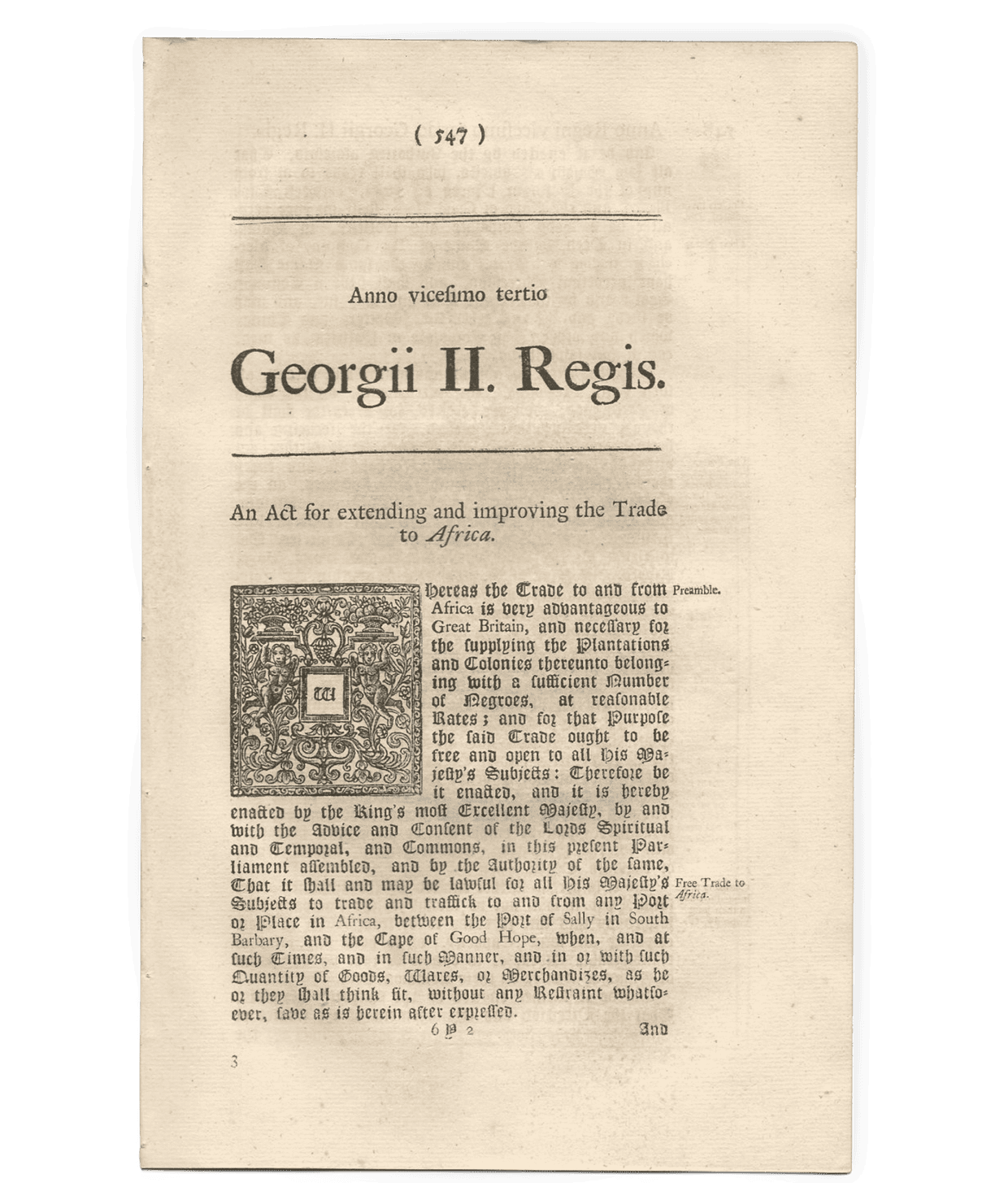
“The 1750 act laid out that the slave trade ‘ought
to be free and open to all his majesty’s subjects’”
The Register of British Slave Traders, published today, is another significant step towards removing these obstacles and reinscribing the slave trade at the centre of the nation’s history. Compiled by a team of historians across three UK universities over four years, the Register identifies some of the roughly 13,000 men and women, based in Britain, who financed the violent transportation of 3.2 million enslaved African men, women, and children for almost two and half centuries. It is the first to gather biographical information on all known investors in the trafficking. These were pivotal centuries for Britain: establishing the British state and its borders, defining its national religion and constitution, enlarging its status in the world, building its empire, launching its core institutions, characterising its culture, forging its progressive values and underpinning unprecedented phases of economic growth. Although slave traders were a tiny minority of the British population, the register shows them exerting an outsized influence on this golden age of British development. The trade in enslaved African people was a formative influence during perhaps the most formative period in Britain’s history.
British slave traders had varied lives. The register reveals how they shaped several aspects of the country’s development and highlights their collusion with the state. To traffic enslaved African people, the Elizabethans had to muscle in on Spanish interests in the Americas and contest decades of Portuguese dominance in the trade. This was diplomatically sensitive and required the support of the most powerful people in England. Those who initiated the traffic did so from the very top of English society: the treasurer of the Royal Navy, Benjamin Gonson, the lord mayor of London, Thomas Lodge, leading courtiers such as Robert Dudley, the Earl of Leicester, and the most powerful man in the country, William Cecil; and Queen Elizabeth herself. All lent their power and prestige to the endeavour, as the register shows, wiring human trafficking into the state’s priorities. The register also shows slave traders’ impact on British politics and the constitution. Merchants embraced the slave trade as they challenged the Stuart monarchy during the English civil war. The monarchy coveted the traffic to defend itself from this challenge. Once restored, the monarchy chartered and led slave-trading monopoly companies to rehabilitate its economic reputation. The slave trade became both a tonic to heal a divided nation and a means to relaunch the monarchy from its lowest ebb.
Plenty of Britons resented the restrictions that these monopolies placed on their access to slave-trading. They established political parties to challenge the monarchy, change the constitution, and widen access to the traffic. In this campaign, successful by 1712, British freedom became a core basis for the enslavement of millions of African people. Slave trader lobbyists developed innovative political methods, prioritising breadth of support over social status. They established novel forms of journalism – deploying opinion and persuasion, rather than just facts – to expand the nation’s slave trade. They formulated new (and still influential) notions of economic growth which celebrated individual entrepreneurial agency. Slave traders opened up access to the traffic, giving a wider section of the population the opportunity to embrace it. Interest in human trafficking cascaded down the social hierarchy. Its reach broadened and its scale increased by 300%, helping to make Britain the predominant slave-trading nation of the 18th century.
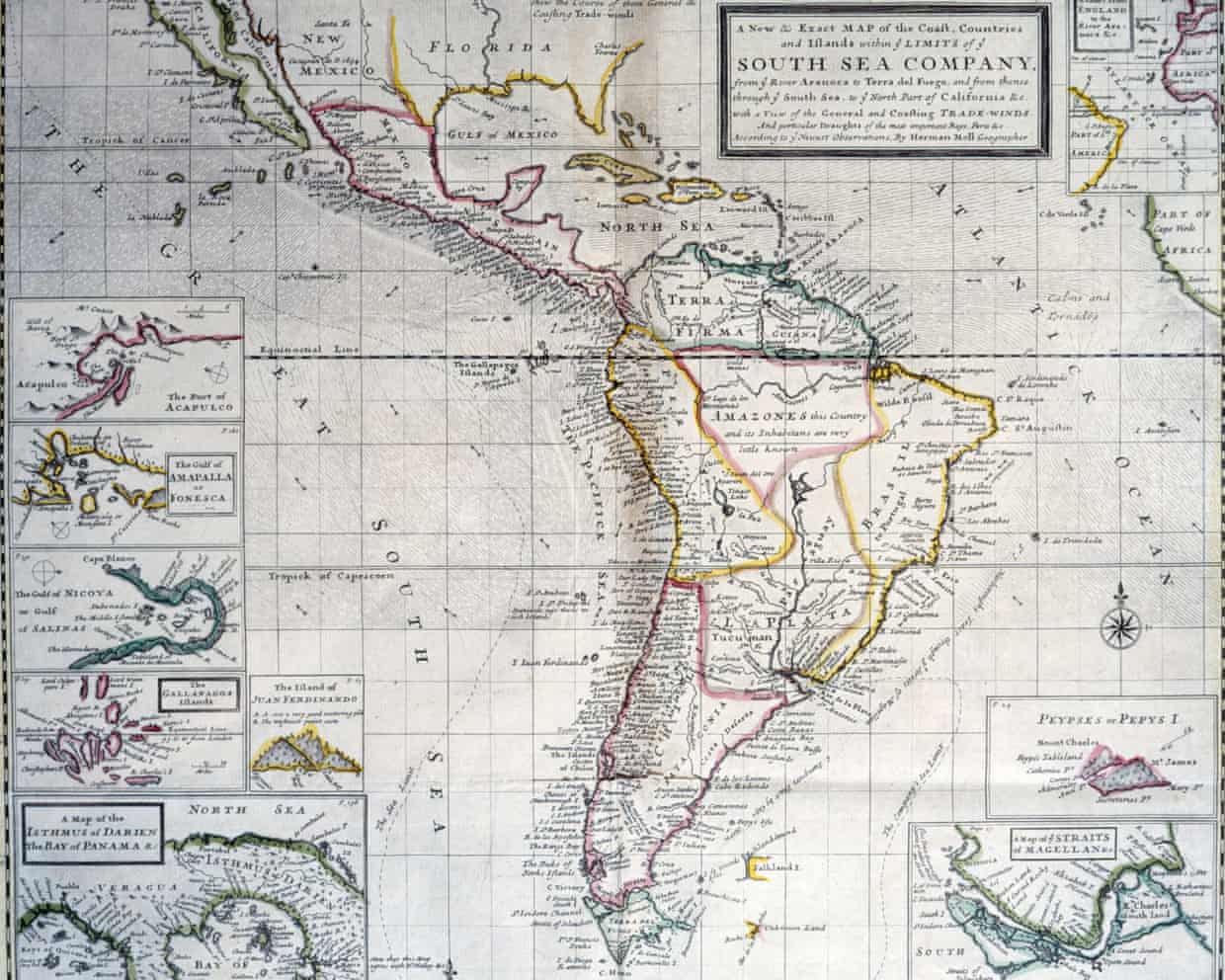
‘The government made the scale of public enthusiasm for the slave trade the basis for a project to refinance the national debt – the slave-trading South Sea Company.’
Slave-trading became associated with the social upstart and propelled social mobility. Recent immigrants, some of them refugees, mostly from France and northern Europe, made up a disproportionate number of investors, as the register shows. The government did not abandon its foundational relationship with the trafficking. It made the scale of public enthusiasm for the slave trade the basis for a project to refinance the national debt – the slave-trading South Sea Company. The public engaged with enslavement in ever greater numbers, with only isolated objection to the unique brutality of the traffic, while viewing Africans as an inferior branch of humanity who deserved their fate in the plantations. The state reflected this engagement by fighting no fewer than three wars to expand the nation’s slave trade: the second Anglo-Dutch war, the war of Spanish succession and the war of Jenkins’ ear.
Londoners kickstarted the traffic. The register reveals a new generation of provincial investors following them, spreading the opportunities of human trafficking to the west and north, helping to expand the country’s economy and providing some of the seed funding for the Industrial Revolution. Access to the free English slave trade became a commercial opportunity embraced by many Scots after the Act of Union. Slave traders pioneered new economic infrastructure – wet docks and canals – connecting port cities such as Liverpool to emerging industrial hinterlands. Investments in trafficking provided a founding generation of female investors, who make up just under 10% of the register, with the means to secure their wealth and the futures of their children.
When assessing the slave traders’ connections to organisations, the register’s story is overwhelmingly about their charity. Slave traders supported the neediest in society, galvanising a national effort to establish and expand a safety net with almshouses, medical care, charity schools and anti-poverty charities. Many justified the trafficking in philanthropic terms – claiming that Africans would be better off on the plantations than in Africa. Britain’s slave traders also helped to define the nation’s culture. The slave trade enticed creative people with sporadic earnings as investors. The register shows how poets (John Gay), playwrights (Thomas Southerne), painters (Sir Godfrey Kneller), composers (George Frideric Handel), and architects (James Gibbs) gravitated towards the traffic while reshaping literature, art, music and architecture in Britain. The register also highlights the conspicuous role of slave traders in the emergence of British science, via the Royal Society, and medicine (Dr Richard Mead and Sir Hans Sloane).
Overall, the register establishes a truly national connection to slavery. It finds investors in, and bequests to, organisations throughout the country. It broadens connections to slavery beyond those memorialised in statues – or whose statues have been toppled – such as Edward Colston in dominant port cities including Bristol and Liverpool, to landlocked counties throughout the UK. It should help us fully confront our history and process the breadth of our society’s connections to it. The register reveals that slave-traders were not protagonists in a distant, primitive phase in the nation’s history. They were enmeshed in the processes that produced the nation we know today. Britons can feel a wide and contrasting variety of connections to this history. But, more than anything else, the Register shows that we are all – in some way – connected to it.”
PREVIOUSLY
RHODES MUST FALL
https://spectrevision.net/2020/06/10/rhodes-must-fall/
the DISMAL SCIENCE
https://spectrevision.net/2020/02/10/the-dismal-science/
COLONIZERS REMORSE
https://spectrevision.net/2018/07/05/colonizers-remorse/
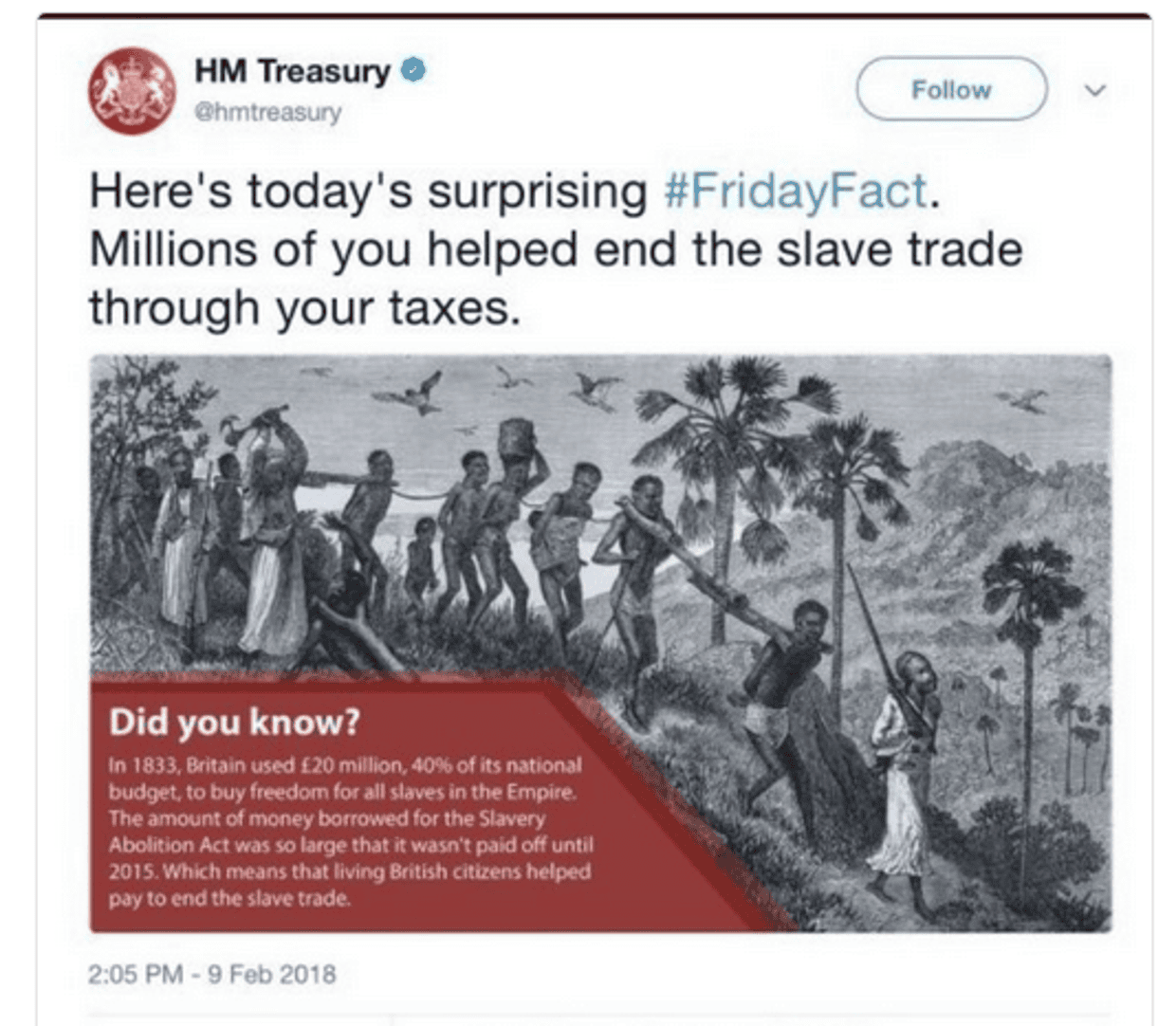
SLAVE OWNER COMPENSATION PACKAGES
https://spectrevision.net/2018/04/11/slave-owner-compensation-packages/
LEGACY STATUS
https://spectrevision.net/2016/09/02/legacy-status/
STILL in BUSINESS
https://spectrevision.net/2012/02/03/still-in-business/
