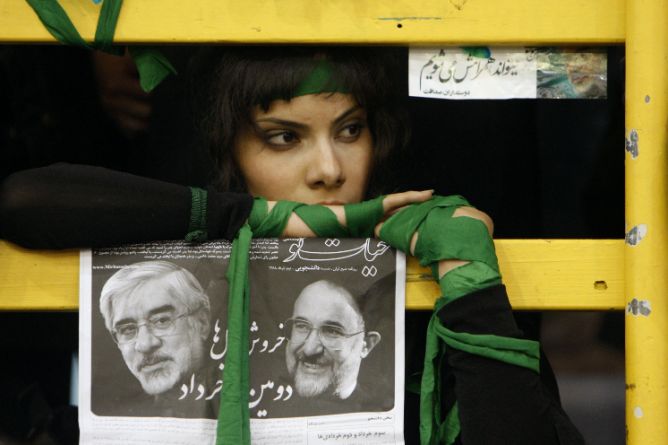
WITHDRAWS TROOPS from MIDDLE EAST
https://theconversation.com/trump-risks-asymmetric-resolve-trap-in-iran
…The other option – that of winding down the war – is still available to Trump. And Trump has gone down this route before. He signed a deal in 2020 with the Taliban to end the war in Afghanistan rather than surge more troops in. And just last year, Trump declared victory and walked away from an air war in Yemen when he realized ground forces would be required to overcome the resolve of the Houthis. The U.S. president could try the same with Iran – saying the job is done then walking away…”
“NO REASON to STAY. WE WON!”
https://dw.com/how-long-can-tehrans-asymmetric-strategy-hold
https://csmonitor.com/Iran-victory-trump-asymmetric-war
What constitutes victory in an ‘asymmetric’ war with Iran?
by Ned Temko / March 19, 2026
“Gone” was President Donald Trump’s verdict this week on the state of Iran’s navy, its air force, its anti-aircraft batteries, its radar installations – and “perhaps most importantly, its leaders.” And on all of the above, with just a bit of his trademark hyperbole, he was absolutely right. Yet even with tit-for-tat attacks on energy facilities threatening to widen the conflict further, Mr. Trump has been making another, broader claim: “We won.”
In the “asymmetric” Iran war, victory looks different for each side: The U.S. and Israel must decisively win – or convincingly claim they have – while the Iranian regime only has to survive. And that isn’t true. At least not yet. Nearly three weeks into the conflict, he has come face-to-face with the sobering complexities of what security experts call “asymmetric war” – an overwhelmingly powerful military force pitted against an ostensibly far weaker adversary. On paper, it ought to be no contest. In this case, the combined might of arguably the two most fearsome fighting forces in the world – the American and Israeli militaries – should surely be able to make Iran surrender, or simply implode.
But in an “asymmetric” war, the definition of victory, for the weaker party, is very different. Knowing it can’t win a conventional military contest, that party aims merely to survive And its path to survival? Widen the war on its terms. Draw it out. Deny the more powerful adversary a quick or easy triumph, while inexorably raising the economic and political cost of a protracted conflict. Mr. Trump isn’t the first U.S. president to face the potential perils of assuming raw power would subdue an enemy that is fighting by different rules: Lyndon Johnson and Richard Nixon learned that lesson, at great political cost, during the Vietnam War six decades ago. But America’s military commitment, and its final forced retreat in Vietnam, came over a period of years. By comparison, Mr. Trump’s Iran challenge is playing out at warp speed.
It began with an audacious daylight strike in late February that eliminated Iran’s leader, Ayatollah Ali Khamenei. In the days since, relentless U.S. and Israeli attacks have combined pinpoint intelligence, precision weaponry, and deadly force. They’ve killed other senior clerical, political, and military leaders in Iran. They’ve targeted missile and drone forces, arms-manufacturing facilities, security police posts, and headquarters buildings. They’ve hobbled much of Iran’s conventional military power. Yet the Iranians’ asymmetric response has been equally rapid, and it is already having an effect. Iran has widened the conflict by targeting America’s wealthy Gulf Arab allies, including the United Arab Emirates, Saudi Arabia, Qatar, Bahrain, and Oman.

“An alert issued by the United Arab Emirates’ interior ministry, warning of potential missile threats and instructing people to seek shelter, is displayed on a mobile phone, amid the U.S.-Israeli conflict with Iran, in Dubai, March 11, 2026.”
It has also been barring all but its own, and ally China’s, ships from passing through the Strait of Hormuz – the narrow Gulf choke point through which some 20% of the world’s oil supply ordinarily passes. The overall result has been a major spike in the world price of oil, gas, jet fuel, and a range of other commodities including fertilizer – increases being felt, in Mr. Trump’s political backyard, by American motorists and farmers. The stakes have been ratcheted up further in the past few days.
An Israeli attack on Iran’s vast South Pars natural gas field on Wednesday prompted Iran to strike energy facilities in Arab Gulf states – including a facility in Qatar providing about one-fifth of the world’s liquid natural gas supply. This asymmetric version of a stalemate has confronted the president with a stark decision: escalate further, or begin looking for a politically viable route to wind down the war and disengage. So far, at least, he seems minded to escalate, hoping that the cumulative effect of the military battering Iran is enduring, and the Israelis’ systematic elimination of its senior leaders, will ultimately leave the Iranians unable to sustain their asymmetric fightback.
Mr. Trump, himself, seems aware that until that happens, any claim to “victory” could ring hollow. Even when telling a rally last week that America had already been victorious, he clearly recognized that point hadn’t yet arrived. “We won,” he said, arguing that with Ayatollah Khamenei’s elimination in the war’s first hour, “it was over.” But he quickly added: “We’ve got to finish the job, right?” That may explain why some 2,500 U.S. Marines have been added to the initial attack force, as well as a new range of targets the Americans and Israelis began to strike on Wednesday this week: Israel’s attack on Iran’s natural gas processing facility; and U.S. forces’ firing of bunker-busting munitions at potential sources of Iranian missile attacks along the Strait of Hormuz.
The arrival of the Marines could open up two further options: seizing Iran’s main oil export facility on Kharg Island at the northern end of the Persian Gulf, or mounting a limited boots-on-the-ground operation to try to secure the strait. Both, however, carry potential risks. Taking Kharg could mean removing Iranian exports from a world oil market already upended by the choking off of the Strait of Hormuz. And, especially if paired with a military move to take control of the strait, it could provoke Iran to expand missile and drone attacks on Arab oil and gas facilities. Mr. Trump reminded his social media followers this week that he was “President of the United States of America, by far the Most Powerful Country Anywhere in the World” – hardly the words of a leader reluctant to “finish the job.” But unless he can virtually eliminate Iran’s missile and drone capacity, he’ll have to reckon with another reality of war – summed up by Jim Mattis, Mr. Trump’s defense secretary during his first term in office. “No war is over,” he said, “until the enemy says it’s over. We may think it over, we may declare it over, but in fact, the enemy gets a vote.”
MEME WAR ONGOING
https://www.nytimes.com/2026/03/27/world/middleeast/iran-war-memes-propaganda.html
https://thehill.com/iran-war-propaganda-memes/
Pro-Iran memes go viral in Trump – Iran propaganda war
by Niall Stanage – 03/28/26
“The war on Iran is the first major conflict where the propaganda battle might be won or lost in memes. Pro-Iran accounts have unleashed viral videos in recent days mocking President Trump, casting him as a dupe of Israeli Prime Minister Benjamin Netanyahu and suggesting U.S. forces could suffer major losses if the conflict continues. The videos make use of AI technology and sophisticated animation, holding Trump and his allies up to ridicule and sometimes presenting the protagonists in the war as Lego-style characters. (The official Lego brand obviously has no connection with the videos in question.) The videos are plainly designed not only to show Iranian defiance but to foment dissent against Trump’s war among Americans. They function almost entirely on a visual level, removing any real language barrier, and the spare text is more often in English than in Farsi. Some videos also make reference to potent topics in American political culture, such as the Jeffrey Epstein scandal.
The pro-Iranian messages are a counterweight, of a kind, to the videos the Trump administration has released to underscore its military successes in the conflict that began on Feb. 28. The U.S. videos have been accompanied by loud music and spliced with clips from franchises including “Call of Duty” and “Top Gun.” In one instance, cartoon character SpongeBob SquarePants even popped up saying, “You want to see me do it again?” amid footage of U.S. strikes on Iran. The American videos have been controversial, with critics complaining about a trivialization or gamification of war and bloodshed. The administration has defended the approach. In one quote that itself went semi-viral on social media, an unnamed senior White House official proudly told Politico, “We’re over here just grinding away on banger memes, dude…”
TROOPS ALREADY WORKING REMOTE
https://bbc.com/news/articles/cddq7j48p35o
https://nytimes.com/2026/03/25/us/politics/iran-us-bases.html
“Iran has bombed U.S. bases across the Middle East in retaliation for the U.S.-Israeli war,forcing many American troops to relocate to hotels and office spaces throughout the region, according to military personnel and American officials. So now much of the land-based military is, in essence, fighting the war while working remotely, with the exception of fighter pilots and crews operating and maintaining warplanes and conducting strikes. Iran’s Islamic Revolutionary Guards Corps has urged people to report these new locations as it hunts for the dispersed troops.
U.S. military officials say that threat is not stopping the Pentagon from carrying out the war against Iran, which is in its fourth week. “To date, we’ve struck over 7,000 targets across Iran and its military infrastructure,” Defense Secretary Pete Hegseth declared last week. He then repeated what has become a common refrain at his news briefings: “Today will be the largest strike package yet, just like yesterday was.” But the relocation of troops to makeshift — one official called them “alternative” — sites raises questions about the Trump administration’s preparations for the war. “There were close to 40,000 U.S. troops in the region when the war started, and Central Command has dispersed thousands of them, some to as far away as Europe, American military officials said.
But many have remained in the Middle East, although not on their original bases, military officials said. The result, according to current and former military officials, is a war that is much harder to prosecute. “Yes, we have the ability to set up expedient operation centers, but you’re absolutely going to lose capability,” said Master Sgt. Wes J. Bryant, a retired Special Operations targeting specialist in the U.S. Air Force. “You can’t just put all that equipment on the top of a hotel, for example. Some of it is unwieldy.”
A U.S. military official said that troops are not working from the roofs of civilian hotels. Iran responded forcefully to the joint American and Israeli strikes, targeting not only U.S. bases but also embassies and oil and gas infrastructure throughout the region. With its supreme leader and dozens of other leaders killed, the Iranian regime has retaliated by launching hundreds of drones and missiles into neighboring countries and largely shuttered the Strait of Hormuz, a vital shipping route, making sure the war would be felt by people across the globe.
Many of the 13 military bases in the region used by American troops are all but uninhabitable, with the ones in Kuwait, which is next door to Iran, suffering perhaps the most damage. Six U.S. service members were killed in a strike on Port Shuaiba that destroyed an Army tactical operations center. Iranian drones and missiles also targeted Ali Al Salem Air Base, damaging aircraft structures and injuring personnel, and Camp Buehring, damaging maintenance and fuel facilities.
In Qatar, Iran struck Al Udeid Air Base, the regional air headquarters of U.S. Central Command, damaging an early-warning radar system. In Bahrain, a one-way Iranian attack drone struck communications equipment at the headquarters of the U.S. Fifth Fleet. At Prince Sultan Air Base in Saudi Arabia, Iranian missiles and drones damaged communications equipment and several refueling tankers. An Iranian-backed militia in Iraq launched a drone swarm attack on an upscale hotel in Erbil early in the war.
Iranian officials have even accused the U.S. military of using civilians as human shields by putting American troops in hotels. “We are forced to identify and target the Americans,” the intelligence arm of the Islamic Revolutionary Guards Corps said in a message to people in the region, according to Tasnim News Agency. “Therefore, it is better not to shelter them in hotels and to stay away from their locations.” The message added that “it is your Islamic duty to accurately report the hiding places of American terrorists and send the information to us on Telegram,” a social media app.
Despite a punishing air campaign, the Iranians “still retain some capability,” Gen. Dan Caine, the chairman of the Joint Chiefs of Staff, acknowledged in the Pentagon news conference last week. General Caine said that “layered defenses throughout the region” were allowing the United States to protect troops and interests but that the Pentagon was trying to bolster defenses in the region. Part of the problem for the Pentagon is that two decades of war in Iraq and Afghanistan — war zones where the United States quickly established air superiority — left the military with facilities and headquarters close to the current front lines.
While Bagram Air Base in Afghanistan and the U.S. Embassy in Baghdad, for example, were often targeted in suicide bombings and other attacks, neither the Taliban nor Iraqi militias possessed the kind of ballistic missile capability that Iran has. During the war in Iraq in particular, the United States built up its bases there and in Kuwait, Bahrain, Saudi Arabia and Qatar. Now, the war in Iran has made all of those bases vulnerable — to the point where service members can’t really live or work there for extended periods, military officials said.
The lack of better planning, some military officials said, also reflects a miscalculation on the part of the administration about how Iran would respond. The Trump administration did not reduce staffing at American embassies and other facilities in the region before the war started, or order departures for nonessential government employees and family members. Nor did the State Department warn Americans to steer clear of the region until after the war began. Two former U.S. officials briefed on military operations said there were no reinforced roofs on command centers at Prince Sultan Air Base in Saudi Arabia, where one service member was killed and several others were wounded in an attack.
Military officials say that American refueling tankers were rushed to the war with little time to orient or practice in the region before getting thrown into the round-the-clock operations. Two American KC-135 tankers collided this month, leading to deaths of six service members. A Central Command spokesman said that incident is under investigation. Sergeant Bryant, the former Air Force special operator, pointed out that one area that the U.S. military excels at is what he called “decentralized execution,” or the ability to continue to do its job even from far afield. “You could cut off the head of the snake and down to the last individual soldier, we’re still going to be operating,” he said. But, he added, “you still lose something.”
PREVIOUSLY
FORCE MAJEURE
https://spectrevision.net/2026/03/12/war-risk-insurance/
PENTAGON PIZZA INDEX
https://spectrevision.net/2025/06/17/pentagon-pizza-index/
LIPSTICK REVOLUTION
https://spectrevision.net/2009/06/19/what-tipped-you-off/